Short answer
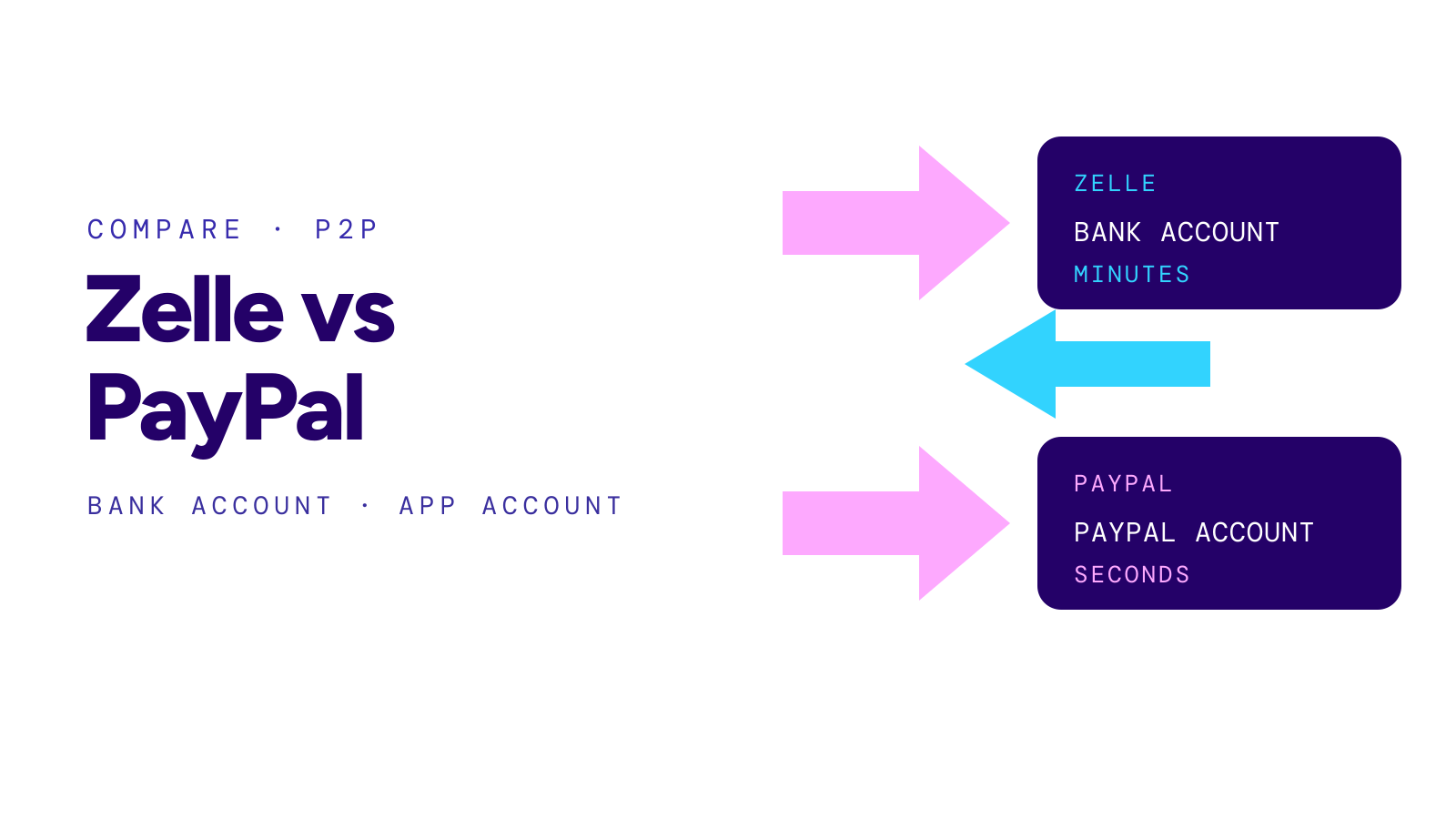
Zelle vs PayPal comes down to where the money lands. Zelle moves money from one U.S. bank account into another, typically within minutes, with limits your bank sets and no purchase protection. PayPal puts money in the recipient’s PayPal account, usually within seconds, charges a fee when you pay with a card or send abroad, and covers eligible purchases, but not friends and family payments.
On this page
Both are free for an ordinary payment inside the US from a bank account, and neither lets you pull back a payment once the recipient has it. The differences are the second step to a bank, cards, sending abroad and what happens when a purchase goes wrong.
At a glance
- ZelleBank-to-bank, inside over 2,300 bank and credit union apps
- PayPalApp account; money waits in PayPal until the recipient moves it to a bank or card
- Zelle feesTypically none for consumers (confirm with your bank)
- PayPal fees$0 from a PayPal balance or bank account; 2.90% + $0.30 from a card; 1.75% for an instant transfer out (min $0.25, max $25)
- Sending abroadZelle no; PayPal yes, 5% (min $0.99, max $4.99) plus a currency conversion spread
- Purchase protectionZelle none; PayPal on eligible purchases, not on friends and family payments
Sources: Zelle: Help Center, PayPal: Consumer Fees (last updated May 19, 2026), PayPal: Purchase Protection Program (last updated January 26, 2026) · Checked on October 15, 2026
Side by side
| Zelle | PayPal | |
|---|---|---|
| Where the money lands | Recipient’s bank account | Recipient’s PayPal account |
| Separate app account | No (inside your bank’s app or online banking) | Yes |
| Send by | Email or U.S. mobile number | Email or mobile number |
| Typical speed | Within minutes to an enrolled recipient | Most payments are received within seconds |
| Fee to send from a balance or bank account | Typically none (bank may differ) | $0 |
| Fee to send from a card | Not a Zelle option | 2.90% + $0.30 |
| Fee to get money into a bank | None needed (already in the bank) | Free standard transfer; 1.75% instant, min $0.25, max $25 |
| Sending limit | Set by your bank | PayPal may set limits on your account |
| Purchase protection | No | Yes, on eligible purchases; not on friends and family payments |
| Cancel a payment | Only if the recipient has not enrolled | Only until the recipient has received it |
| Unclaimed payment | Expires after 14 days, money returns | Refunded if the recipient does not claim it |
| Send abroad | No (both sides need U.S. bank accounts) | Yes: 5% (min $0.99, max $4.99) plus a 4% spread if the recipient gets another currency |
Sources: Zelle: Help Center, Zelle: What if the person hasn’t enrolled?, PayPal: Consumer Fees, PayPal User Agreement (last updated September 14, 2026) · Checked on October 15, 2026
How each one works
Zelle is a payment network built into the apps and online banking of participating banks and credit unions. You send to an email address or U.S. mobile number, and the money goes into the bank account behind the recipient’s Zelle profile. Zelle says it is available in over 2,300 bank and credit union apps, and that both sender and recipient must have U.S. bank accounts. For the basics, see what is zelle.
PayPal is an account of its own. A friends and family payment goes into the recipient’s PayPal account; from there they can spend it, keep it in a PayPal Balance account, or move it to a linked bank account or debit card. A recipient without a PayPal account can claim the money by opening one.
Speed
Zelle says money is “typically available to an enrolled recipient within minutes”. If the recipient has not enrolled, the payment waits; after 14 days it expires and the money returns to you. See how long does zelle take.
PayPal’s user agreement says “most PayPal payments are received within seconds”. Getting the money into a bank is a second step: a standard transfer to a linked bank account is free, and an instant transfer costs 1.75%.
Timeline
- Zelle, minute 0you send from your bank’s app
- Zelle, within minutesthe money is in an enrolled recipient’s bank account
- PayPal, minute 0you send from the Friends and Family tab
- PayPal, within secondsin most cases the money is in the recipient’s PayPal account
- PayPal, cash-outthe recipient moves it to a bank by a free standard transfer or a 1.75% instant transfer
Sources: Zelle: Help Center, PayPal User Agreement, PayPal: Consumer Fees · Checked on October 15, 2026
Fees
Zelle says that, typically, there are no fees for consumers to send or receive, and recommends confirming with your bank or credit union.
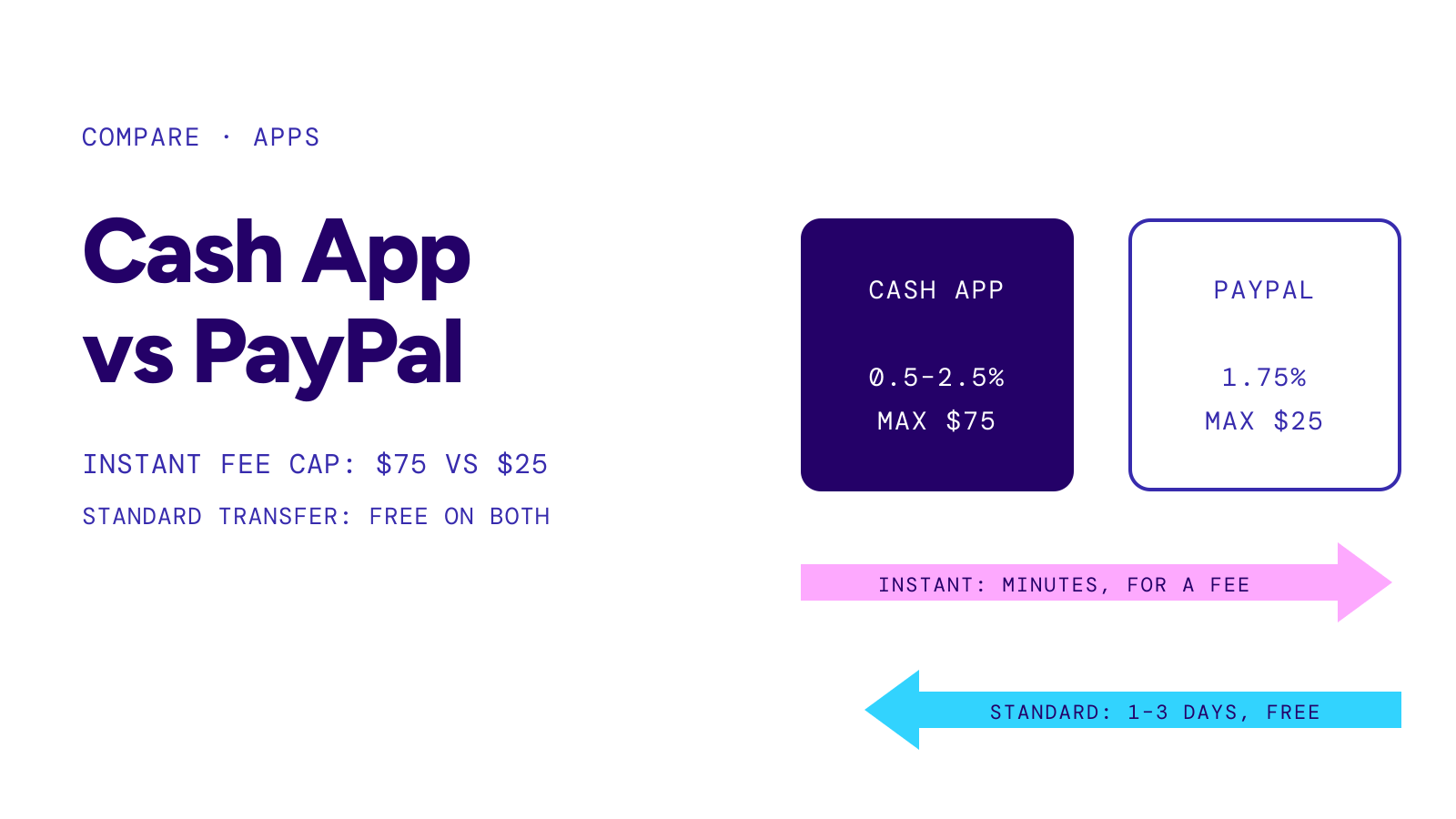
PayPal charges nothing for a domestic friends and family payment from a PayPal balance, the PayPal Debit Card or a bank account, and nothing to receive one. Paying with a credit or debit card costs 2.90% plus $0.30, and PayPal’s user agreement adds that your card issuer may also charge a cash-advance fee. Moving money out costs nothing by standard transfer; an instant transfer to a bank or debit card costs 1.75% (minimum $0.25, maximum $25). A paper check costs $1.50 if you have no PayPal Balance account. When you pay for goods or services through PayPal, the buyer pays no fee and the seller does. For the cash-out fees of PayPal, Venmo and Cash App, see instant transfer fee.
At a glance
- PayPal instant transfer to a bankup to $25,000 per transaction
- PayPal standard or instant transfer to a cardup to $5,000 per transaction, per day and per week, and $15,000 per month
Source: PayPal: Consumer Fees, withdrawal limits · Checked on October 15, 2026
Limits
Zelle’s limits are your bank’s, so they differ from one bank to the next. Wells Fargo’s Zelle terms, for example, allow most consumer accounts $3,500 in a rolling 24 hours and $20,000 in a rolling 30 days; see wells fargo zelle limit. Look up your own bank in the banks that use zelle table.
PayPal’s user agreement says it “may, at our discretion, impose limits on the amount of money you can send”, and that verifying your account can raise your withdrawal limit.
Sources: Wells Fargo: Zelle Transfer Service Addendum (effective September 15, 2026; checked October 13, 2026), PayPal User Agreement · Checked on October 15, 2026
Buying from someone: purchase protection
This is the biggest practical difference.
Zelle says it “does not offer purchase protection”, for example if you do not receive the item or it is not as described, and recommends not using Zelle when you do not know the person or are not sure you will get what you paid for. Your bank may offer protection under its own terms.
PayPal may refund the full price plus original shipping under its Purchase Protection program when an eligible item does not arrive or is significantly not as described. You must open a dispute within 180 days of paying. Personal payments, “including payments sent using PayPal’s friends and family functionality”, are not eligible. Neither are vehicles (except small personal ones such as bicycles), and an item you pay for online but collect in person is not covered if it never arrives.
Warning
A seller who asks you to pay by PayPal Friends and Family, or by Zelle, is asking you to give up purchase protection. PayPal’s user agreement forbids sellers to ask for it. Pay a seller as a purchase, or not at all.
Sources: Zelle: paying someone you don’t know, PayPal: Purchase Protection Program, PayPal User Agreement · Checked on October 15, 2026
When something goes wrong
Wrong recipient. Zelle payments to an enrolled recipient cannot be canceled or reversed; you can cancel only while the recipient has not enrolled. See can you cancel a zelle payment. PayPal lets you cancel for a full refund until the recipient has received the payment, but warns that most payments arrive within seconds; check the transaction in your activity and select Cancel if it is offered.
Stuck payment. On Zelle, “pending” usually means the recipient has not enrolled (see zelle payment pending). On PayPal, see paypal payment pending.
A payment you did not make. PayPal asks you to tell it at once and says you may lose money taken after 60 days from the statement if you wait longer. Zelle sends you to your bank; it says qualifying imposter scams may be eligible for reimbursement. See zelle scam refund.
Sources: Zelle: Help Center, PayPal User Agreement · Checked on October 15, 2026
Which fits which situation
This site does not pick a winner. The published facts point to these fits:
- Straight into a bank account: if both people bank with a Zelle participant, Zelle does it without a cash-out step.
- Paying a seller: PayPal’s Purchase Protection can apply when you pay as a purchase; Zelle offers none.
- Someone abroad: PayPal can send outside the US for a fee; Zelle cannot.
- Paying with a credit card: PayPal allows it for 2.90% plus $0.30; Zelle moves bank money only.
For Zelle against the other apps, see zelle vs venmo and zelle vs cash app. This comparison reports what Zelle and PayPal publish. It is not financial advice.