Short answer
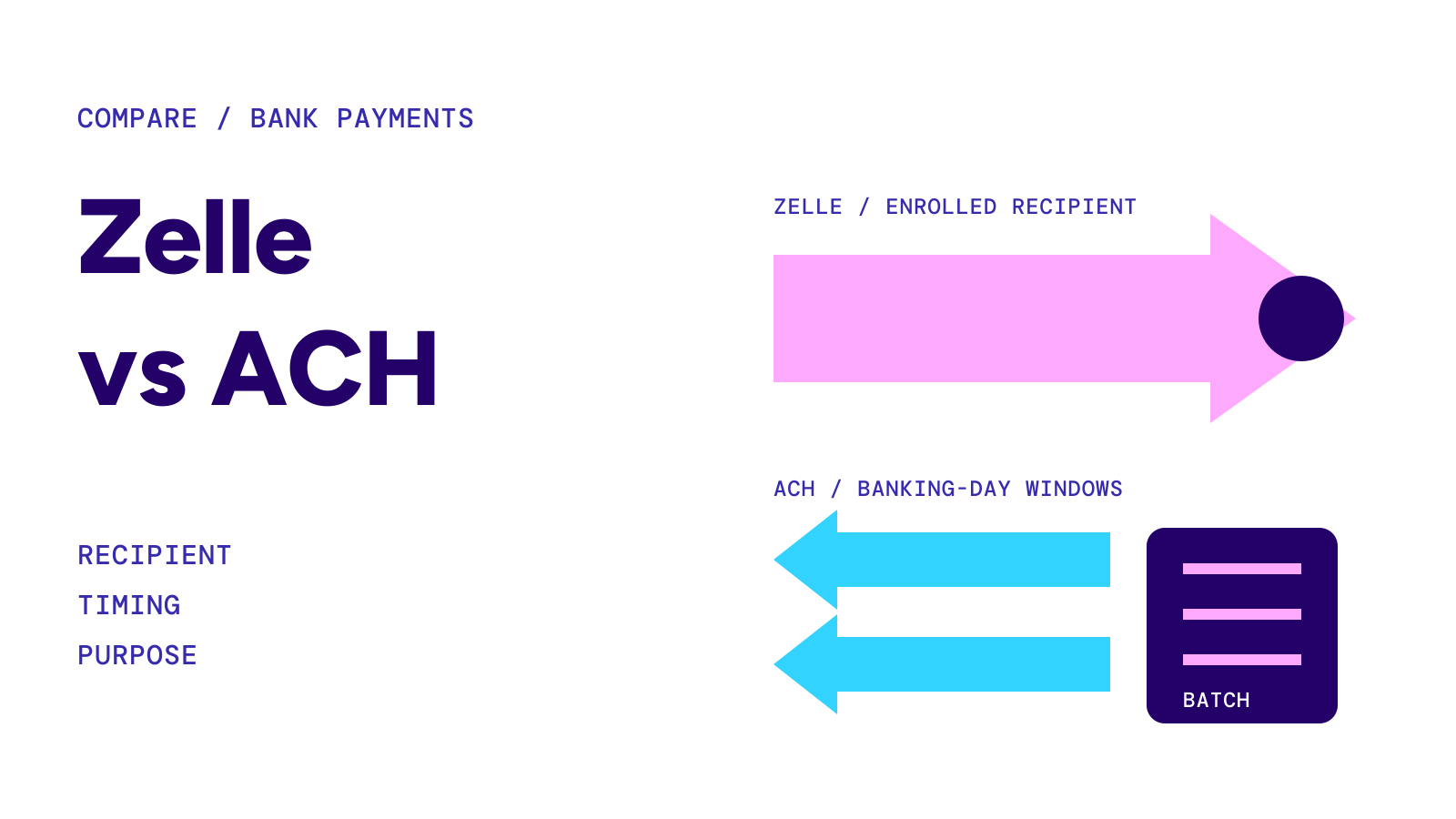
Zelle vs Cash App comes down to where the money goes. Zelle sends money from one U.S. bank or credit union account straight into another, typically within minutes, with limits set by your bank. Cash App moves money into a Cash App balance, usually instantly, with its own limits ($1,000 per 30 days unverified, $40,000 verified) and a fee if you want it in your bank instantly.
On this page
Both are fast and both are hard to undo. They differ in who holds the money, who sets the limits, and what it costs to get cash into your bank account.
At a glance
- ZelleBank-to-bank; built into over 2,400 bank and credit union apps
- Cash AppApp account with its own balance and debit card
- Zelle feesTypically none for consumers (confirm with your bank)
- Cash App fees3% to send from a credit card; 0.5%–2.5% for instant cash-out; standard cash-out free
- Zelle limitsSet by each bank
- Cash App limits$1,000 per 30 days unverified; $40,000 per 30 days sent when verified
Sources: Zelle: Are there any fees?, Zelle: FAQ, Cash App: Account Limits, Cash App Terms of Service · Checked on September 27, 2026
Side by side
| Zelle | Cash App | |
|---|---|---|
| Where the money lands | Recipient’s bank account | Recipient’s Cash App balance |
| Eligible bank account required, both sides | Yes (checking or savings) | |
| Separate app account | No (inside your bank’s app or online banking) | Yes |
| Send by | Email or U.S. mobile number | $cashtag, phone number or email |
| Typical speed | Within minutes to an enrolled recipient | Usually instant |
| Fee to send | Typically none (bank may differ) | 3% from a credit card |
| Fee to get money into a bank | Not applicable (already in the bank) | Free standard (1–3 business days); 0.5%–2.5% instant |
| Sending limit | Set by your bank | $1,000 per 30 days unverified; $40,000 per 30 days verified |
| Receiving limit | Set by your bank | $1,000 per 30 days unverified; per account when verified |
| Cancel a payment | Only if the recipient has not enrolled | Usually not, once completed |
| Reverse a completed payment | No | No (the recipient can refund it) |
| Debit card | No | Yes (Cash App Card) |
| Bitcoin | No | Yes |
Sources: Zelle Help Center, Zelle: Can I cancel a payment?, Zelle: Can I reverse a Zelle payment?, Cash App: Account Limits, Cash App: Withdrawal Transfer Speed Options, Cash App: Cancel a payment, Cash App Terms of Service · Checked on September 27, 2026
How each one works
Zelle is a payment network that banks and credit unions offer inside their own apps and online banking. You send to the recipient’s email address or U.S. mobile number, and the money goes into the bank account tied to their Zelle profile. Zelle says it is “available in over 2,400 bank and credit union apps” and that both parties need an eligible checking or savings account. For the basics, see what is zelle.
Cash App is an app account with its own balance. Payments go into the recipient’s Cash App balance. To get that money into a bank, the recipient transfers it out, which is free on the standard route and paid on the instant route.
Speed
Zelle says money is “typically available to an enrolled recipient within minutes”. If the recipient has not enrolled, the payment waits; if they do not enroll within 14 days it expires and the money returns to the sender. Zelle suggests checking enrollment and the email or phone number used if more than three days have passed. See how long does zelle take.
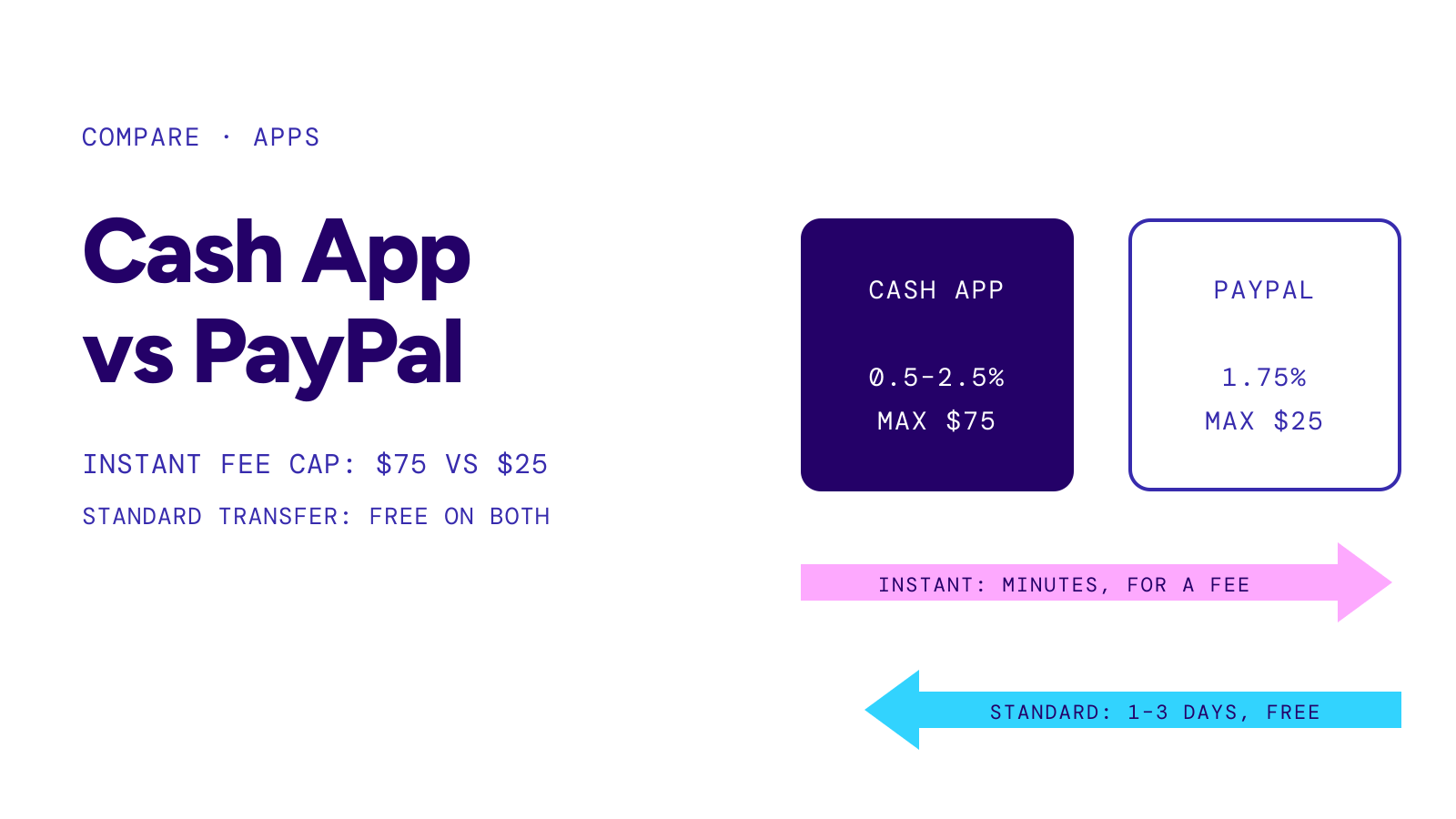
Cash App says payments are usually available instantly. A payment that shows as pending for 24 hours is automatically canceled. Getting the money into a bank adds a second step: 1–3 business days on a standard transfer, or typically immediately to a linked debit card on an instant transfer.
Timeline
- Zelle, minute 0you send from your bank’s app
- Zelle, within minutesmoney is in an enrolled recipient’s bank account
- Cash App, minute 0you send from Cash App; it is usually in the recipient’s balance instantly
- Cash App, cash-outinstant transfer to a debit card (fee), or standard transfer in 1–3 business days (free)
Fees
Zelle says that, typically, there are no fees for consumers to send or receive, and recommends confirming with your bank or credit union. It cites a Q1 2026 survey of participating institutions in which 99.40% of linked consumer checking and savings accounts charged no fee to send, receive or request money.
Cash App’s Terms of Service list sending from a credit card at 3% and instant transfers out at 0.5%–2.5% (minimum $0.25–$1, maximum $75). Standard transfers are free. For all three apps’ cash-out fees, see instant transfer fee.
Limits
Zelle’s FAQ says to “contact your bank or credit union directly to learn more about their sending and receiving limits through Zelle”. Your limit on Zelle is your bank’s limit.
Cash App publishes its own: unverified accounts can send and receive up to $1,000 in a rolling 30 days, with a $1,500 total account limit; verified accounts can send up to $40,000 in a rolling 30 days. Details in cash app limit.
When something goes wrong
Wrong recipient. Zelle payments cannot be reversed once they reach an enrolled recipient; you can cancel only while the recipient has not enrolled. Cash App says it cannot cancel or refund a completed payment sent to the wrong account; you ask the recipient for a refund through Report an Issue or a new Request.
Stuck payment. On Zelle, “pending” usually means the recipient has not enrolled (see zelle payment pending). On Cash App, pending usually means an action is needed in the Activity feed (see cash app payment pending).
Unauthorized card use. Cash App says it offers Zero Fraud Liability on unauthorized Cash App Card transactions reported within 60 days, and that payments you authorized yourself, even if you were misled, are harder to recover.
Warning
Both services move money fast and neither can pull back a payment you authorized. Zelle says to send only to people you know and trust. Cash App says its support will never ask you to send a payment, make a purchase or complete a test transaction. The FTC warns that scammers pose as your bank and walk you through “moving” money with Zelle into an account that is really theirs, and says your bank will never contact you to tell you to transfer money. If you paid a scammer, report it to the app or bank and at ReportFraud.ftc.gov.
Sources: Zelle: Can I cancel a payment?, Cash App: Keep your money and account safe, Cash App: How to identify scams, FTC: Do you use payment apps like Venmo, Cash App or Zelle? · Checked on September 27, 2026
Which fits which situation
This site does not pick a winner. The published facts point to these fits:
- Money should land directly in a bank account, and both people bank with a Zelle participant: Zelle does that without a cash-out step.
- The recipient does not use Zelle, or wants a balance and debit card in an app: Cash App works without Zelle enrollment.
- Large amounts: check your bank’s Zelle limit and your Cash App verified limit.
- Buying from strangers: neither service can reverse an authorized payment.
This comparison reports what Zelle and Cash App publish. It is not financial advice.