Short answer
What is Zelle? Zelle is a US payment network that moves money directly between checking or savings accounts at participating banks and credit unions, usually within minutes. You send it from your bank’s app or online banking using the recipient’s email address or US mobile number. It is owned and operated by Early Warning Services, LLC.
On this page
Zelle is not a wallet and does not hold a balance. The money leaves your bank account and lands in the recipient’s bank account. That makes it fast and usually free, and it is also why a completed payment cannot be pulled back.
At a glance
- OperatorEarly Warning Services, LLC
- Where it worksInside the apps and online banking of more than 2,300 banks and credit unions
- Who can use itPeople with an eligible US checking or savings account
- SpeedTypically minutes between enrolled users
- FeesTypically none; 99.40% of linked consumer accounts pay no fee (Zelle survey, Q1 2026)
- LimitsSet by each bank or credit union
- InternationalNo; both accounts must be at US banks
- ReversibleNo
Source: Zelle Help Center · Checked on September 26, 2026
How Zelle works
- Your bank offers it. Zelle sits inside the app of a participating bank or credit union. There is no separate Zelle app any more; Zelle says the stand-alone app is no longer accessible.
- You enroll a contact. You link an email address or a US mobile number to your bank account.
- You send. You enter the recipient’s enrolled email or number and the amount, then confirm.
- The money lands. If the recipient is enrolled, the money is typically in their account within minutes. If not, they get a message and 14 days to enroll.
Zelle payments go from account to account. Zelle says it does not hold users’ money or manage their bank accounts, while with other peer-to-peer platforms the money first travels to and is held by a third party.
How big it is
| Measure | Figure | Period |
|---|---|---|
| Money sent | More than $1.2 trillion | 2025 |
| Transactions | 4.2 billion | 2025 |
| Average per day | $3.4 billion | 2025 |
| Institutions in the network | More than 2,300 | 2026 |
| New institutions live or signed | 337 | 2025 |
Sources: Zelle, February 11, 2026, Zelle, January 27, 2026 · Checked on September 26, 2026
Zelle quotes two network sizes: “more than 2,300 financial institutions” and “over 2,400 banking and credit union apps.” The first counts institutions, the second counts apps.
What Zelle costs
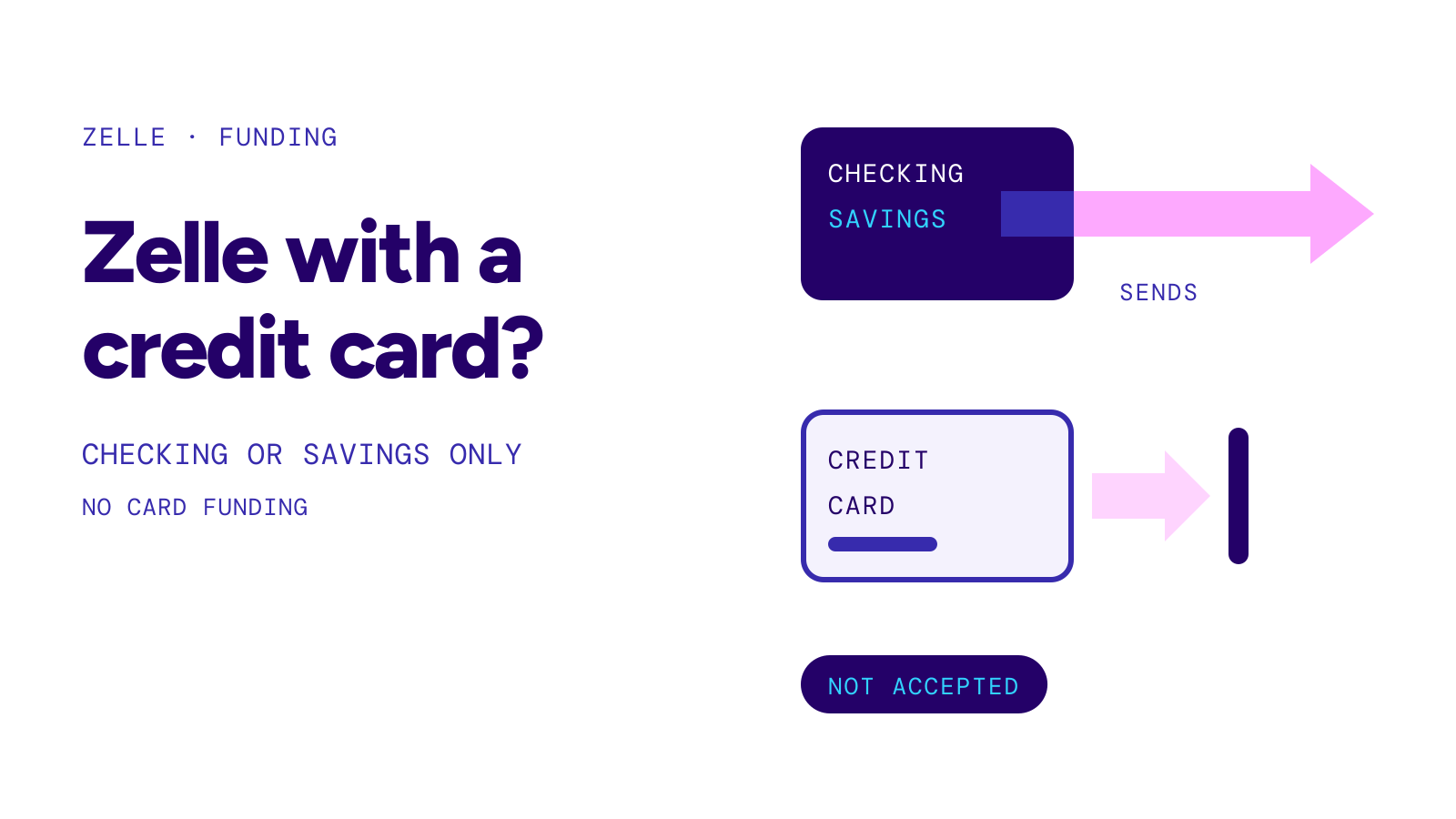
Zelle itself does not charge consumers. Your bank could. In a Zelle survey of participating institutions in the first quarter of 2026, 99.40% of consumer checking and savings accounts linked to Zelle had no fee to send, receive or request money. Check your bank’s fee schedule if you want to be sure. Zelle draws on a bank account, not a credit line, so for the card question see can you use zelle with a credit card.
Limits
There is no single Zelle limit. Each bank or credit union sets how much you can send. Your bank’s Zelle page, help center or account agreement is where to find it.
Is Zelle safe?
Zelle is meant for people you know and trust. The risk is not in the network but in who you pay: once an enrolled recipient has the money, the payment cannot be reversed or cancelled.
Warning
Do not use Zelle to pay strangers, online sellers you have not met, or anyone who contacts you first claiming to be your bank. Zelle says it requires banks to reimburse confirmed fraud and certain qualifying imposter scams. It also says that paying a contractor who does not finish the work is not payments fraud.
Zelle reports that 0.02% of its transactions led to a report of fraud or scam in the first half of 2025.
Zelle, taxes and purchase protection
Two questions come up whenever Zelle is used to pay for something rather than to split a bill.
At a glance
- IRS reportingZelle says it does not report transactions on its network to the IRS and does not issue Form 1099-K
- Taxable paymentsZelle says reporting taxable income you receive is your responsibility
- Purchase protectionNone for payments you authorized, for example an item that never arrives or is not as described
Sources: Zelle: Does Zelle report how much money I receive to the IRS?, Zelle: Security · Checked on October 10, 2026
Zelle says the law that requires certain payment networks to send Form 1099-K does not apply to the Zelle network, and that the same holds for small businesses receiving payments for goods and services. That is a statement about reporting, not about tax: a payment that is taxable stays taxable however it arrives.
On purchases, Zelle’s security page tells buyers who do not know the seller to consider a credit card instead, because card issuers often offer buyer protection and Zelle does not. Banks repeat this in their own Zelle terms.
Zelle compared with payment apps
| Zelle | Payment apps (Cash App, Venmo, PayPal) | |
|---|---|---|
| Where the money goes first | Straight to the recipient’s bank account | Often to the app, which holds it |
| Where you use it | Your bank’s app | The company’s own app |
| Moving money to your bank | Already there | A transfer out of the app |
Source: Zelle: Fast facts and common questions · Checked on September 26, 2026
Read next: How long does Zelle take and Zelle payment pending.