Short answer
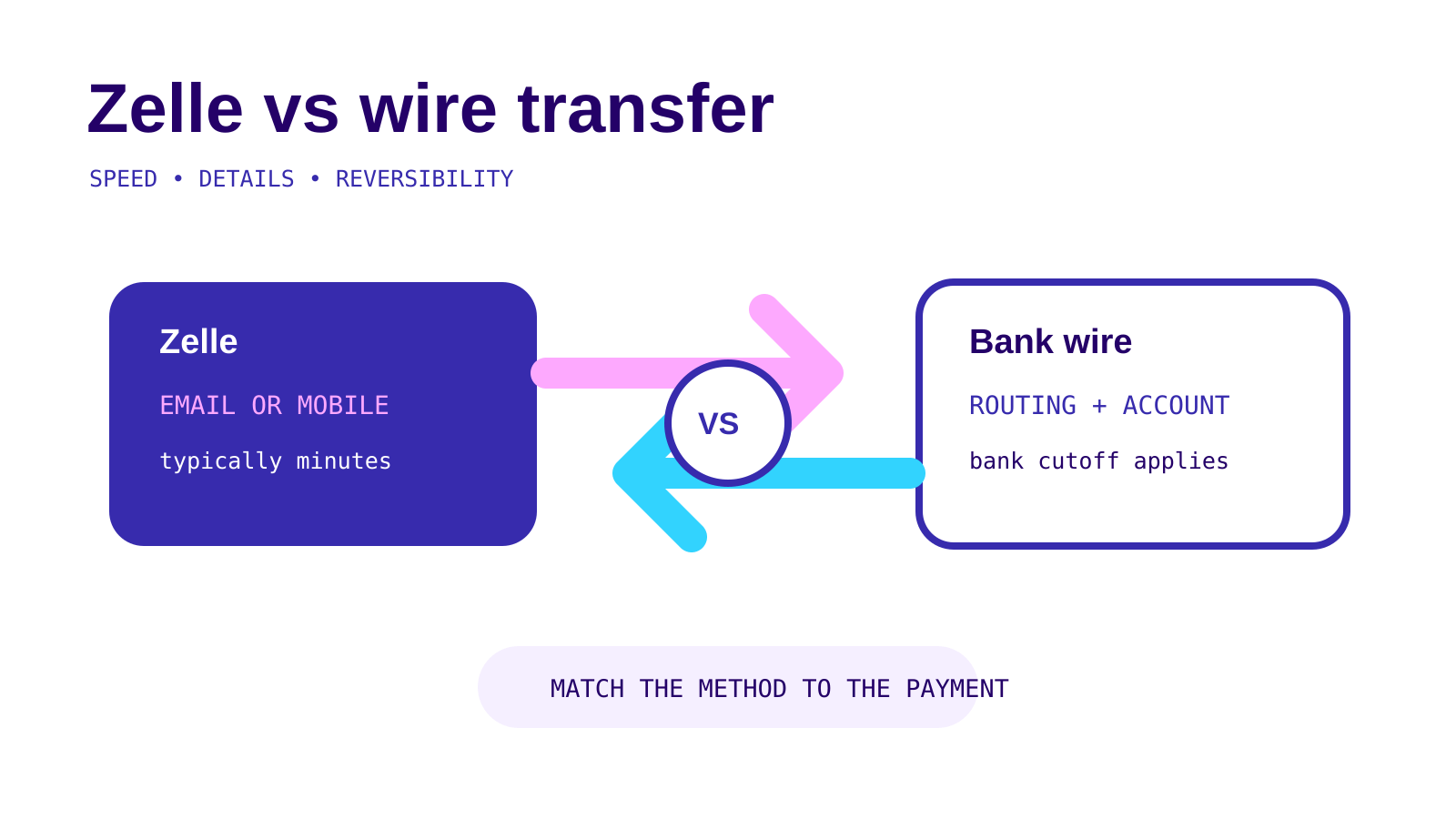
ACH vs wire transfer: a domestic wire usually reaches the other bank the same business day and cannot be pulled back once sent. An ACH transfer usually settles in one banking day (Same Day ACH in hours), and unauthorized ACH transfers from a consumer account are covered by federal consumer rules that do not apply to wires. Use a wire when the money must land today and you have verified the recipient. Use ACH for routine transfers.
On this page
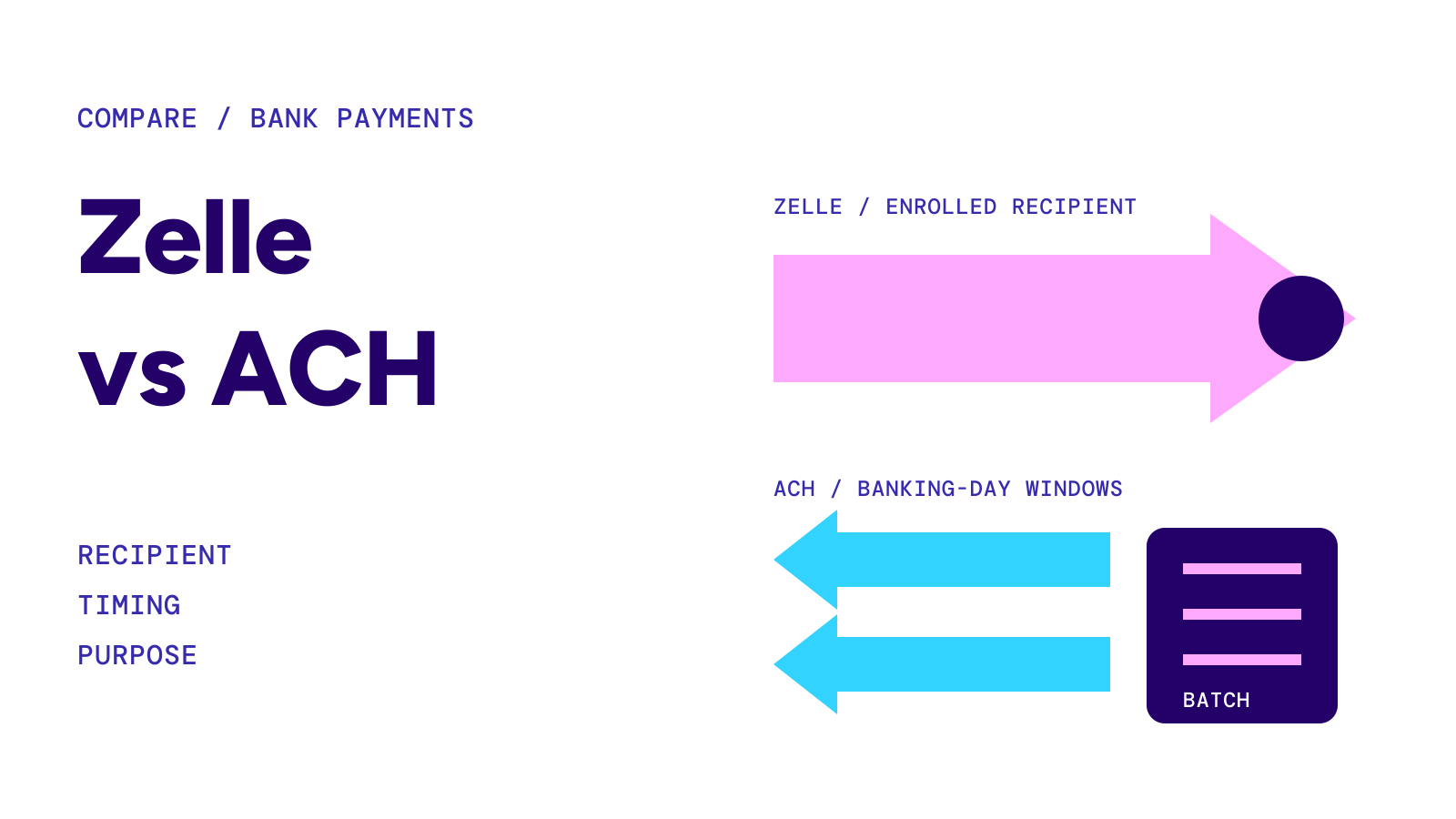
Both move money between US bank accounts. The difference is how: a wire is sent one payment at a time over Fedwire or a private wire system; ACH gathers payments into batches that settle at set times on banking days.
Side by side
| Wire transfer | ACH transfer | |
|---|---|---|
| Typical speed | Same business day if sent before the bank’s cutoff | Same Day ACH in hours; standard ACH in one or two banking days |
| System | Fedwire (or a private wire system) | ACH Network, under Nacha rules |
| Settlement | One payment at a time | In batches, at set times |
| Hours | Fedwire: 9:00 PM ET the day before to 7:00 PM ET, business days | Settles on banking days only |
| Limit example | Citi online domestic wires: up to $50,000 per account per business day | Same Day ACH: $1 million per payment; your bank may set lower limits |
| Fee example | Capital One outgoing domestic wire: $30 online or phone, $40 in branch | Set by your bank; check its fee schedule |
| Reversible | No, once sent | Returns and disputes possible within set time limits |
| Unauthorized-transfer protection | Wire transfers are excluded from Regulation E | Consumer ACH transfers are covered by Regulation E |
Sources: Federal Reserve Financial Services, Nacha, Citi, Capital One, CFPB Regulation E § 1005.3 · Checked on September 26, 2026
Speed
A domestic wire requested before your bank’s cutoff is usually received by the other bank the same business day. Fedwire’s last call for customer transfers is 6:45 PM ET, and banks set their own customer cutoffs. See How long do wire transfers take for cutoffs by bank.
ACH runs on a schedule. Nacha estimates that 80% of ACH payments settle in one banking day or less. Same Day ACH has three settlement times, at 1:00 PM, 5:00 PM and 6:00 PM ET. See How long does ACH take.
Neither settles on weekends or Federal Reserve holidays.
Cost
Fees are set by each bank. Outgoing wires usually carry a published fee; Capital One, for example, charges $30 for a domestic wire sent online or by phone and $40 in a branch. For ACH transfers, check your bank’s fee schedule or the transfer screen before you send.
Reversibility and protection
This is the biggest practical difference.
Wires are final. Once a wire is sent, recovery depends on the receiving bank and the recipient. Regulation E, the federal rule that protects consumers against unauthorized electronic transfers, excludes transfers made over Fedwire or similar wire systems.
ACH can be disputed. ACH transfers to and from a consumer account are electronic fund transfers under Regulation E. If an ACH debit you did not authorize hits your account, report it to your bank; how much of the loss you can be held liable for depends on how quickly you report it.
Warning
A wire is hard to recover from a scammer. If anyone pressures you to wire money quickly, or sends “new” wire instructions by email, call the recipient on a number you already know before sending.
Which should you use?
| Situation | Better fit | Why |
|---|---|---|
| Money must arrive today, to a verified recipient | Wire | Same business day if sent before the cutoff |
| Moving money between your own banks | ACH | Routine; covered by Regulation E |
| Paying a regular bill | ACH | Scheduled debits and credits are what ACH is for |
| Paying someone you have never met | Neither without verifying them | Both are hard to get back from a scammer |
| Sending money abroad | International wire or a remittance provider | Remittance transfers carry their own disclosure and cancellation rights |
What people call these transfers
Banks and apps use several names for the same two systems, which is why “is a bank transfer the same as a wire?” is such a common question.
At a glance
- Direct depositan ACH credit; Nacha uses payroll Direct Deposit as its standard example of one
- Direct payment, direct debitan ACH debit pulled by a company you authorized
- EFT, electronic bank transfer, eChecknames Nacha lists for payments that move on the ACH Network
- Wire transfera separate system (Fedwire or a private wire system), one payment at a time
Sources: Nacha: How ACH payments work, Nacha: The ABCs of ACH · Checked on October 10, 2026
So a “bank transfer” between your own accounts at two banks is usually ACH unless the screen says wire. A wire is always labelled as one and usually carries a fee.
Read next: How long does ACH take and How long do wire transfers take.