Short answer
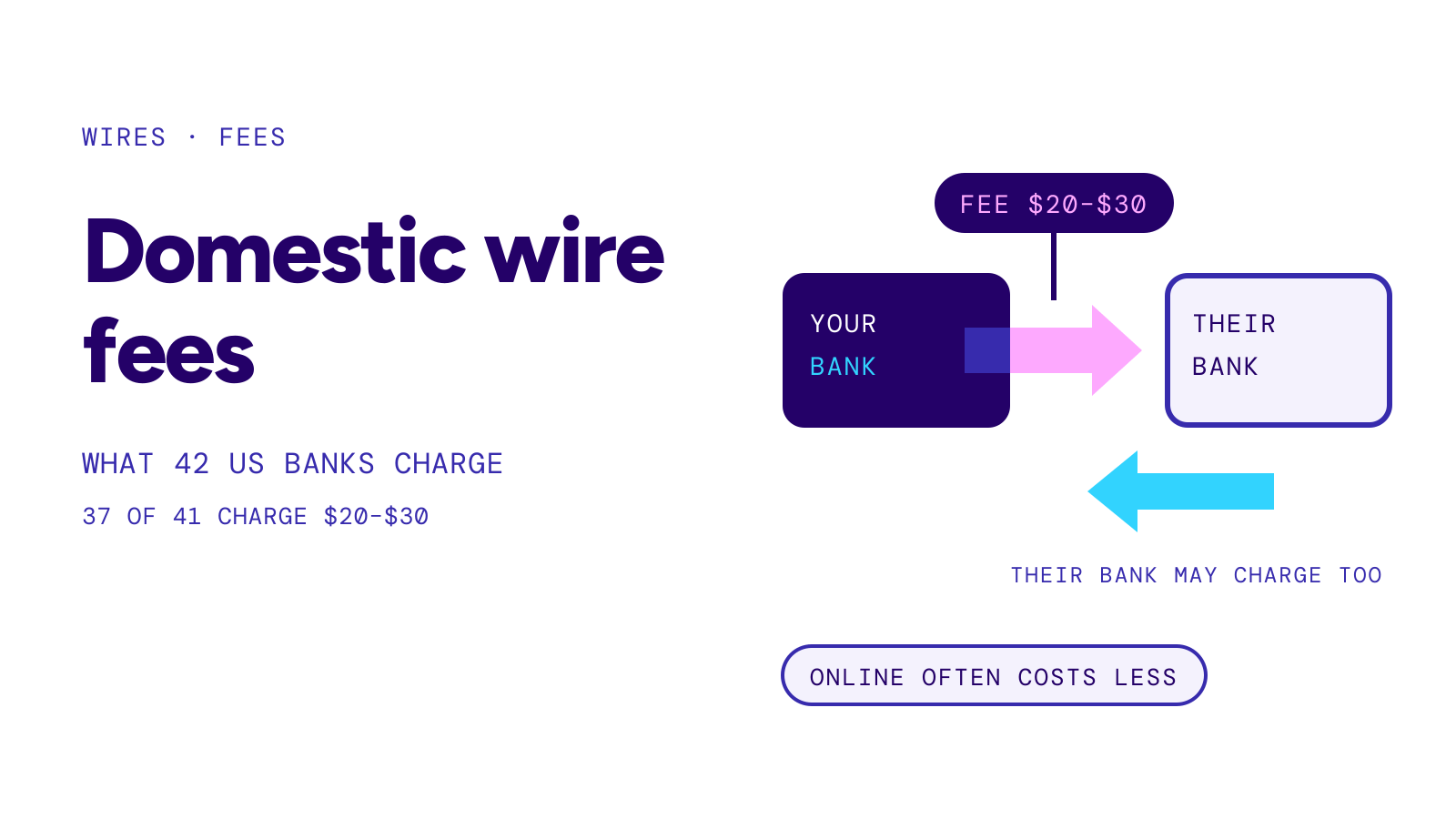
A domestic wire transfer fee at US banks and credit unions runs from $15 to $32 to send money to another US account, based on each institution’s own fee schedule. 37 of the 41 with a set price charge between $20 and $30. Sending online often costs less than going through a branch or a banker.
On this page
The fee in the table is what your own bank charges to send. The bank that receives the wire may take its own incoming fee, and international wires have their own, separate prices.
At a glance
- Most common price$30, at 17 of the 41 institutions with a set fee
- Lowest listed$15 at America First Credit Union and Mountain America Credit Union, and at Schwab Bank for a wire submitted online
- Highest listed$32 at M&T Bank
- Credit unionsall 11 with a set fee charge $25 or less
- Online vs in personChase $25 online, $35 with a banker; Wells Fargo $30 digital, $40 in a branch
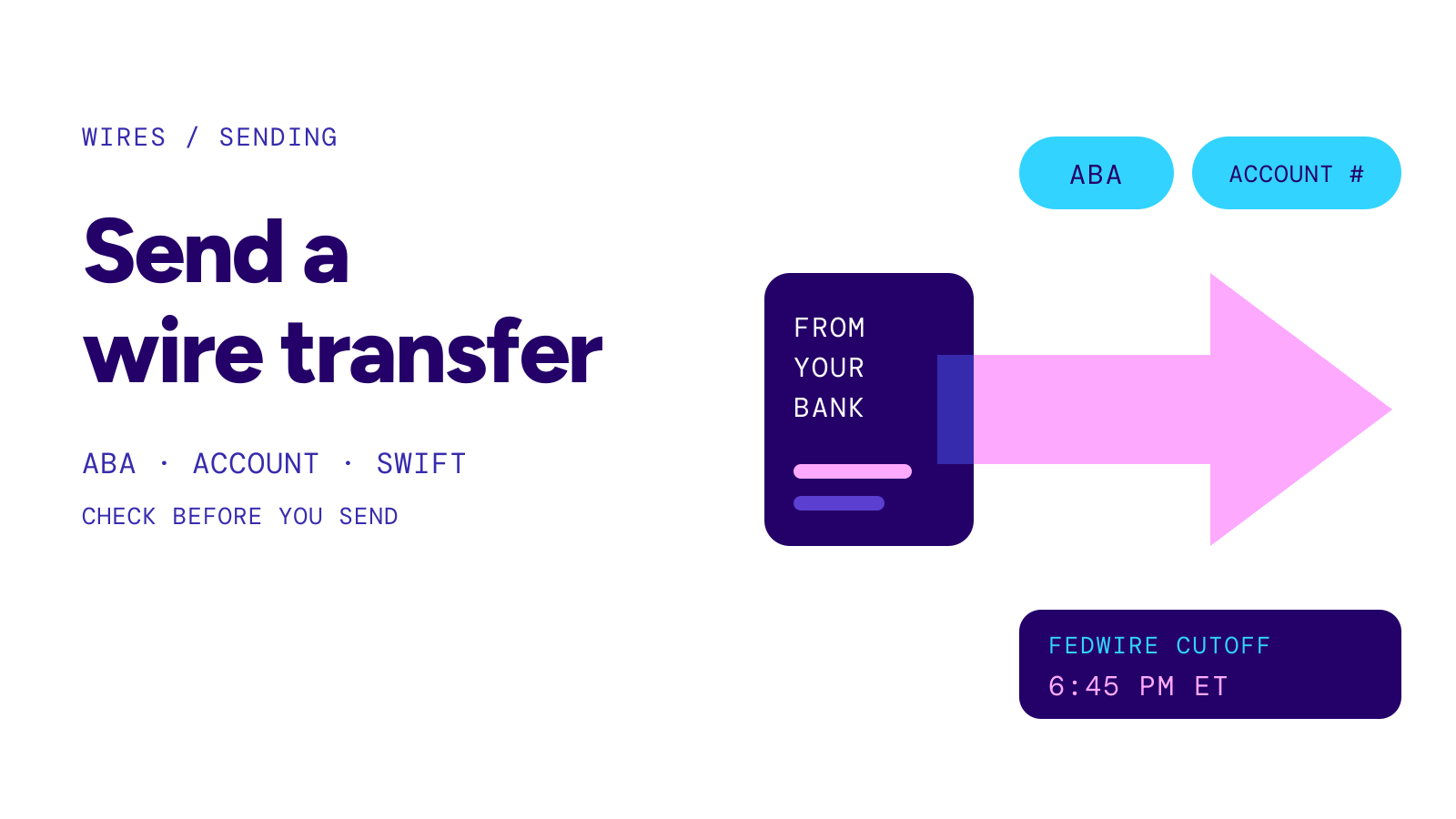
- Fedwire customer transfer cutoff6:45 PM ET; your bank’s own cutoff is earlier
Source: each institution’s fee schedule as linked in the table below · Checked on September 27, 2026 to October 19, 2026 per bank (Navy Federal, Capital One and Santander re-checked October 27, 2026)
Domestic wire transfer fees by bank
The table covers the 42 banks and credit unions in our Banks catalog that list a fee for sending a domestic wire, in order of search demand. A price for a branch or a banker appears only where the fee schedule gives one.
| Bank or credit union | Outgoing domestic wire | Source |
|---|---|---|
| Navy Federal Credit Union | $20 | Fee schedule |
| Bank of America | $30 | Fee schedule |
| Wells Fargo | $30 digital wire, $40 in a branch | Fee schedule |
| Chase | $25 online, $35 with a banker | Fee schedule |
| KeyBank | $30 ($10 to another KeyBank account) | Fee schedule |
| USAA | $20 | Fee schedule |
| Capital One | $30 online or by phone; individuals cannot send one in a branch | Fee schedule |
| Citibank | $30 online, $35 through a branch or banker (Standard) | Fee schedule |
| PNC Bank | $25 online or mobile, $30 with an agent | Fee schedule |
| U.S. Bank | $30 ($25 to another U.S. Bank account) | Fee schedule |
| TD Bank | $30 | Fee schedule |
| Truist | $30 with a teammate; $20 online (Truist Wealth and Premier) | Fee schedule |
| Regions | $30 | Fee schedule |
| Fifth Third | $30 (complimentary on Preferred Checking) | Fee schedule |
| Huntington | $25 | Fee schedule |
| Citizens | $30 ($18 repetitive); waived on Quest and Private Client | Fee schedule |
| M&T Bank | $32 ($16 to an M&T account); waived on MyChoice Premium | Fee schedule |
| Ally | $20 | Fee schedule |
| SoFi | $30 | Fee schedule |
| Discover | $30 | Fee schedule |
| PenFed | $25 | Fee schedule |
| American Express | $20 (Rewards Checking, online only) | Fee schedule |
| Schwab Bank | $25; $15 if submitted online | Fee schedule |
| Santander | $25 ($15 for Select Checking and Select Money Market Savings) | Fee schedule |
| BMO | $30 | Fee schedule |
| First Citizens Bank | $30 | Fee schedule |
| BECU | $25 | Fee schedule |
| Synovus | $26 | Fee schedule |
| Alliant Credit Union | $25 | Fee schedule |
| Zions Bank | $27 | Fee schedule |
| First Horizon Bank | $30 | Fee schedule |
| Associated Bank | $25; $28 for an occasional branch-created wire | Fee schedule |
| Old National Bank | $30 | Fee schedule |
| Bank OZK | $20 online, $30 otherwise | Fee schedule |
| Golden 1 Credit Union | $25; qualifying Golden Prestige domestic benefit free | Fee schedule |
| SchoolsFirst FCU | $20 | Fee schedule |
| America First Credit Union | $15 | Fee schedule |
| Mountain America Credit Union | $15 | Fee schedule |
| Security Service FCU | Free with Power Protected Checking ($9/month account) | Fee schedule |
| Global Credit Union | $20 | Fee schedule |
| Desert Financial Credit Union | $20 | Fee schedule |
| Patelco Credit Union | $20 | Fee schedule |
Source: each institution’s own fee schedule or wire page, as linked · Checked on September 27, 2026 (Regions and Fifth Third: September 28; Zions Bank, First Horizon, Associated Bank and Old National: October 2; Bank OZK: October 4; Golden 1 and SchoolsFirst: October 7; America First and Mountain America: October 8; Security Service and Global Credit Union: October 9; Desert Financial and Patelco: October 14; First Citizens: October 19; Navy Federal, Capital One and Santander: October 27, 2026)
These are standard consumer prices. Business accounts and premium relationship tiers often have their own schedules.
How the channel changes the price
Several banks charge less when you send the wire yourself:
- Chase: $25 online, $35 with a banker.
- Wells Fargo: $30 for a digital wire, $40 in a branch.
- PNC: $25 online or in the mobile app, $30 with an agent.
- Citi: $30 online, $35 through a branch or a banker.
- Bank OZK: $20 online, $30 any other way.
- Schwab Bank: $25, or $15 if the wire is submitted online.
Capital One has a single price: its 360 Checking disclosures put an outgoing domestic wire at $30, sent online or by phone, and individuals cannot send one in a branch. Capital One’s wire page says a wire requested by 2 p.m. ET is delivered the same day and one requested later arrives the next business day, and it lets you send up to $50,000 to an individual.
Ways to pay less
- Send to the same bank. KeyBank charges $10 to another KeyBank account instead of $30, U.S. Bank $25 to another U.S. Bank account instead of $30, and M&T $16 to an M&T account instead of $32.
- Check your account tier. Fifth Third lists the wire as complimentary on Preferred Checking, Citizens waives it on Quest and Private Client, and M&T on MyChoice Premium. Santander charges $15 instead of $25 for Select Checking and Select Money Market Savings, Truist $20 online for Truist Wealth and Premier clients, and Golden 1 includes a qualifying domestic wire with its Golden Prestige benefit. Security Service FCU makes the wire free with Power Protected Checking, an account with a $9 monthly fee.
- Repeat wires. Citizens charges $18 instead of $30 for a repetitive wire.
- Ask whether a wire is needed. For money that does not have to land the same day, an ACH transfer may cost nothing: Navy Federal, for example, lists no fee for ACH transfers to a checking account elsewhere. See ach vs wire transfer for speed, cost and what each can undo, and the ach transfer limit your bank sets.
What else you may pay
The receiving bank’s fee. Many banks charge to receive a wire. Navy Federal, for example, charges nothing for an incoming wire, while others charge $15 or more. Our table of each bank’s incoming wire transfer fee lists them. Capital One’s wire page notes that the receiving bank may charge additional fees.
A second wire if the first goes wrong. A wire sent to the wrong account is not simply cancelled: once the receiving bank has accepted it, your bank can only ask for the money back, and the receiving bank does not have to agree. See can a wire transfer be reversed.
Warning
Wires sent through Fedwire are left out of Regulation E, the rule behind the Electronic Fund Transfer Act (section 1005.3, paragraph c-3), so you do not get the error rights you have for a debit card or an ACH payment. Check the recipient’s name, account number and routing number before you pay, and confirm wiring instructions by phone, never only by email.
Timing and cutoffs
How fast a domestic wire lands depends on the bank: Capital One says a wire requested by 2 p.m. ET is delivered the same day, while Navy Federal tells members to expect 1–2 business days. The Federal Reserve’s Fedwire Funds Service takes customer transfers until 6:45 PM ET on business days; banks set earlier cutoffs for their customers. See each bank’s wire transfer cutoff time, and for the steps and details your bank asks for, see how to send a wire transfer.