Short answer
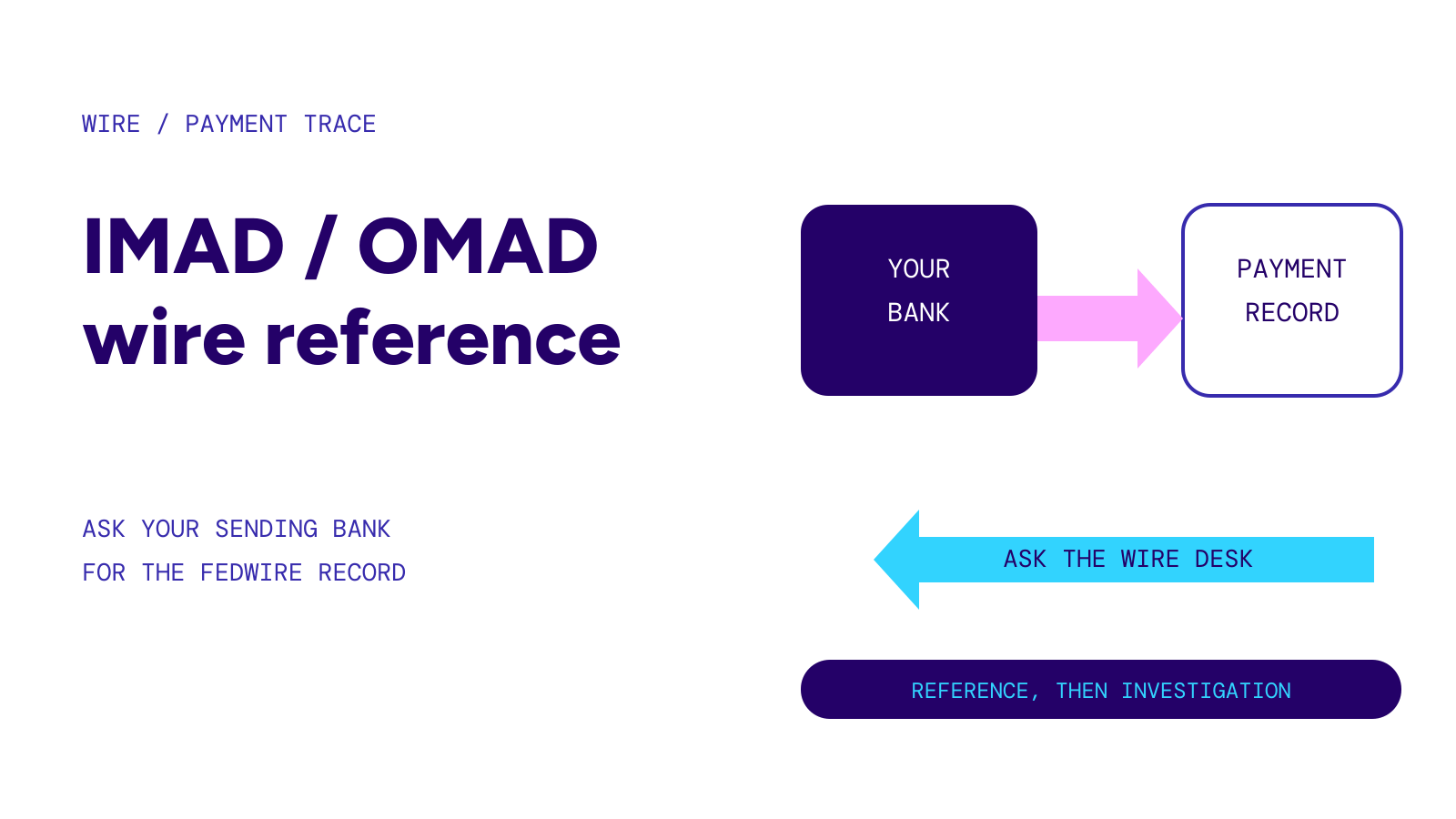
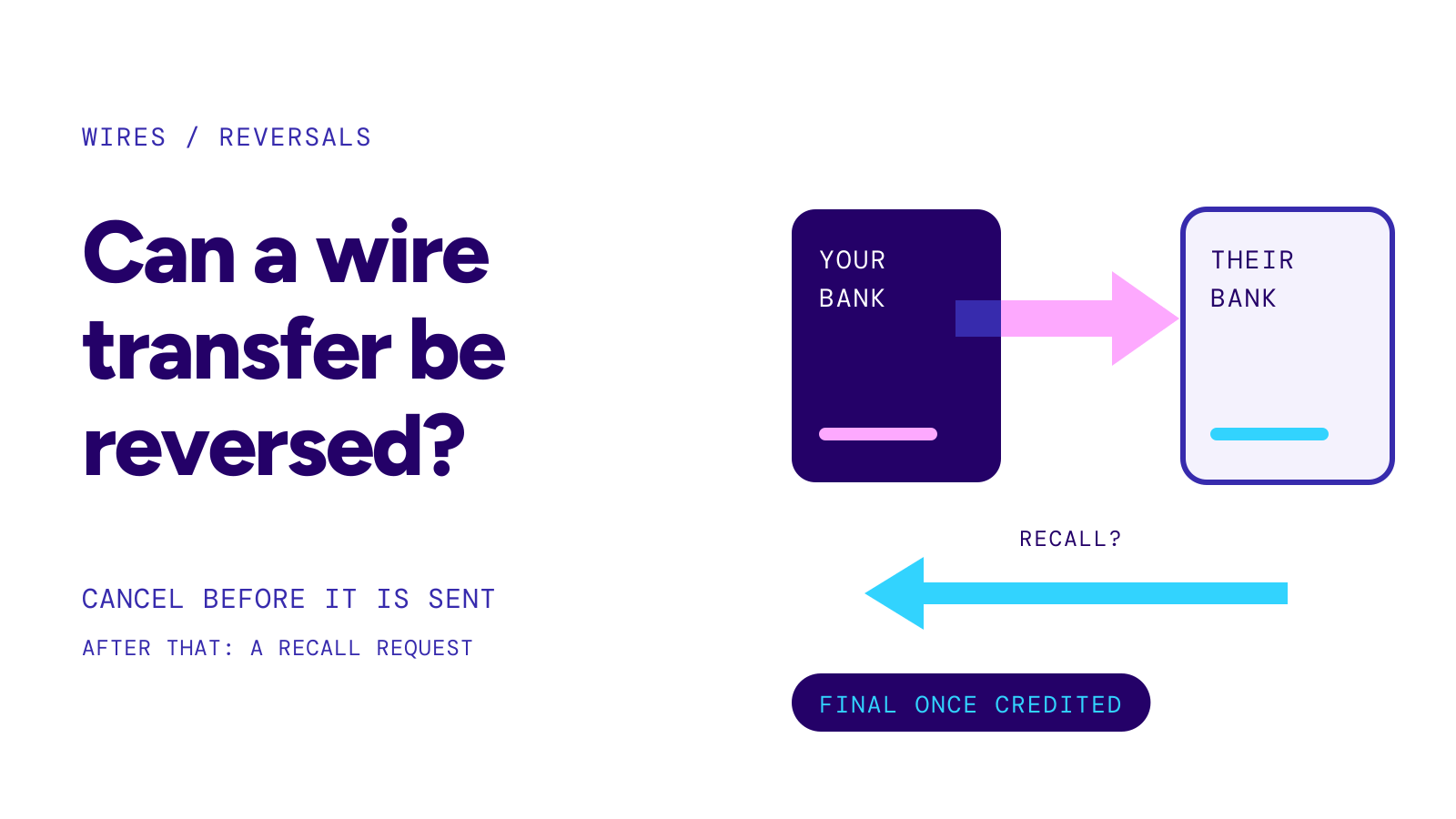
A wire transfer can be reversed only in narrow cases. You can cancel it before your bank sends it, and most international wires a consumer sends can be canceled within 30 minutes. Once the recipient’s bank has accepted a domestic wire, a recall works only if that bank agrees, and the law lets it agree only for an unauthorized, duplicate, misdirected or overpaid wire.
On this page
At a glance
- Before your bank sends itYou can cancel, if the bank gets your request in time to act on it
- Future-dated wire at ChaseCancel until 11:59 PM ET the day before the send date
- Same-day domestic wire at ChaseNo cancel option
- International wire from a personal account30 minutes to cancel, refund within 3 business days
- After the recipient’s bank accepts itA recall needs that bank’s agreement
- Fedwire paymentFinal and irrevocable once the receiving bank is credited
Sources: Chase: Wire transfer FAQs · 12 CFR 1005.34 · UCC 4A-211 · Federal Reserve: Fedwire Funds Services · Checked on October 24, 2026
Why a wire is so hard to undo
A domestic wire moves through Fedwire, the Federal Reserve’s large-value payment service. The Fed describes Fedwire transfers as immediate, final and irrevocable once processed: payment to the receiving bank is final when the Fed credits that bank’s account or sends it the payment order. The Fed does not take money back out of the receiving bank at your bank’s request.
The rules between you, your bank and the recipient’s bank come from Article 4A of the Uniform Commercial Code, the state law for wire transfers. The Fed’s Regulation J applies the same Article 4A to every transfer that runs through Fedwire. Regulation E, the federal rule that lets you dispute many electronic payments, leaves out wires sent through Fedwire and similar systems, except for international remittance transfers.
That is the difference from other bank payments. An ACH debit can be returned for days after it posts (see can an ach transfer be reversed). A wire has no such return window.
Before your bank sends it: cancel
Under Article 4A, a cancel request works if your bank receives it in time and in a way that gives the bank a reasonable chance to act before it accepts your order. If your bank uses a security procedure, such as a one-time code, the cancel request has to pass it too, unless the bank agrees anyway.
In practice, the window is set by your bank’s own rules. At Chase:
- A same-day domestic wire has no cancel option.
- A future-dated domestic wire can be canceled until 11:59 PM ET the day before the send date.
- An international wire from a personal account can be canceled for 30 minutes after you authorize it, with Cancel in your wire activity. Chase shows the button only next to wires that can still be canceled.
Chase also warns that recovery of your money is very unlikely if you send a wire by mistake or because of a scam.
International wires: the 30-minute rule
Most international wires a consumer sends are remittance transfers under federal rules. The provider has to honor a cancel request it receives no later than 30 minutes after you pay, as long as the request lets it identify you and the transfer, and the money has not been picked up or deposited into the recipient’s account. It then refunds everything you paid, fees included, within three business days. The steps are in cancel international money transfer.
After the money is sent: a recall
Once the recipient’s bank has accepted the wire, Article 4A says a cancellation works only if that bank agrees. Even then, the law allows it only when the wire:
- was unauthorized,
- is a duplicate of a wire you already sent,
- pays someone not entitled to the money, or
- pays more than the recipient was owed.
A change of mind is not on the list. If the recipient’s bank does agree, it can try to get the money back from the account holder under the law on mistakes, and your bank can hold you liable for its costs of the cancellation, including reasonable attorney’s fees, unless your agreement or the payment system’s rules say otherwise. This is why banks call it a recall request: your bank asks, and the other bank decides.
Warning
A recall is a request, not a guarantee. If the money has already been withdrawn or moved on, there may be nothing left in the account to send back. Call your bank the moment you notice the problem, not the next day.
Wrong account number
A wire carries the recipient’s name and account number, and the receiving bank does not have to check that they match. Article 4A lets the receiving bank rely on the number alone if it does not know the name and number belong to different people. A typo in the account number can therefore send your money to a stranger.
Two things can still help:
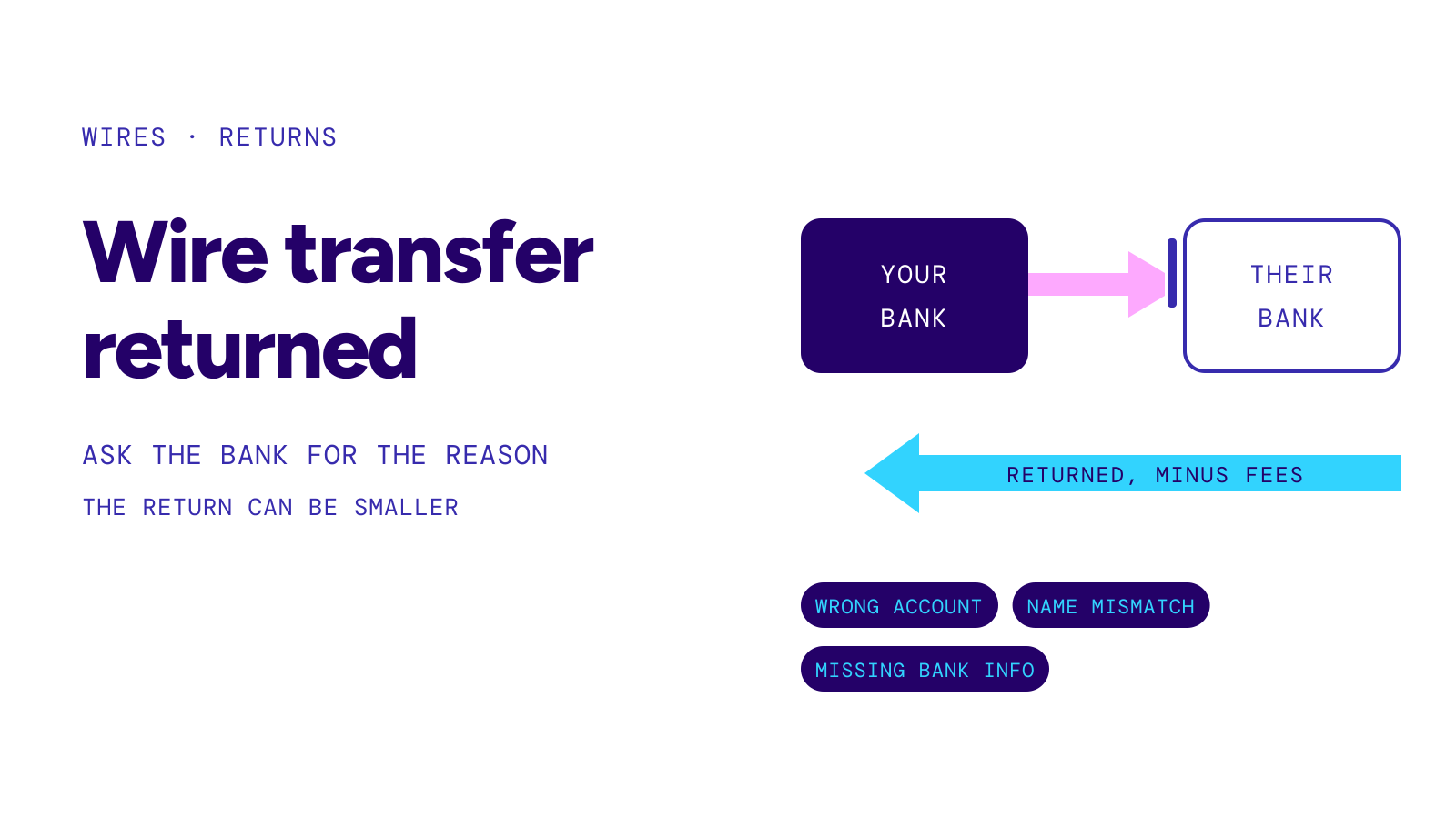
- The wire bounces. If the number points to an account that does not exist, no one can accept the payment. Chase lists a wrong account number and a name that doesn’t match the recipient bank’s records among the reasons a wire comes back. A returned wire can arrive with less money, after bank fees or a different exchange rate.
- The sender was not warned. If you are not a bank and you prove the person paid by number was not entitled to the money, you are not obliged to pay for the wire, unless your bank proves you were told beforehand that it might be paid by number alone. A signed notice in your wire agreement is enough proof, so many banks include one.
A wire you did not send
If someone sent a wire from your account without your authority, and it does not count as yours under the security procedure you agreed with your bank, Article 4A says the bank must refund it with interest. You lose the interest, not the refund, if you fail to tell the bank within a reasonable time, which can be no more than 90 days after the bank told you about the wire or debited your account. Check your statements and wire alerts, and report a wire you don’t recognize at once.
A wire that never arrived
If a wire is never completed, because the recipient’s bank never accepted it, you do not owe it. Article 4A excuses the sender’s obligation in that case, and a bank you already paid has to refund you; this right cannot be changed by agreement. If the money left your account but the recipient says it never landed, start with wire transfer not received.
What to do now
- Call your bank. Use the number on your card or the bank’s website. Chase asks customers who sent money to the wrong account, or think they were scammed, to call 1-800-935-9935.
- Ask for a recall. HelpWithMyBank, the OCC’s consumer site, says to contact your bank and the bank that may have received the money, ask for a recall, and ask the bank to take steps such as closing the account or stopping pending transfers.
- Report fraud. For a scam, HelpWithMyBank suggests a complaint to the Federal Trade Commission, and for fraud that started on the internet, to the FBI’s Internet Crime Complaint Center (IC3).
- Escalate if needed. You can file a complaint with the OCC about a national bank.
Never pay someone who promises to get a wire back for a fee.