Short answer
The international wire transfer fee at large US banks runs from $30 to $65 to send a wire abroad in US dollars, and $0 to $25 to receive one, based on each bank’s own fee schedule. Sending in foreign currency is often cheaper or free, but the bank then earns money on the exchange rate, which includes a markup.
On this page
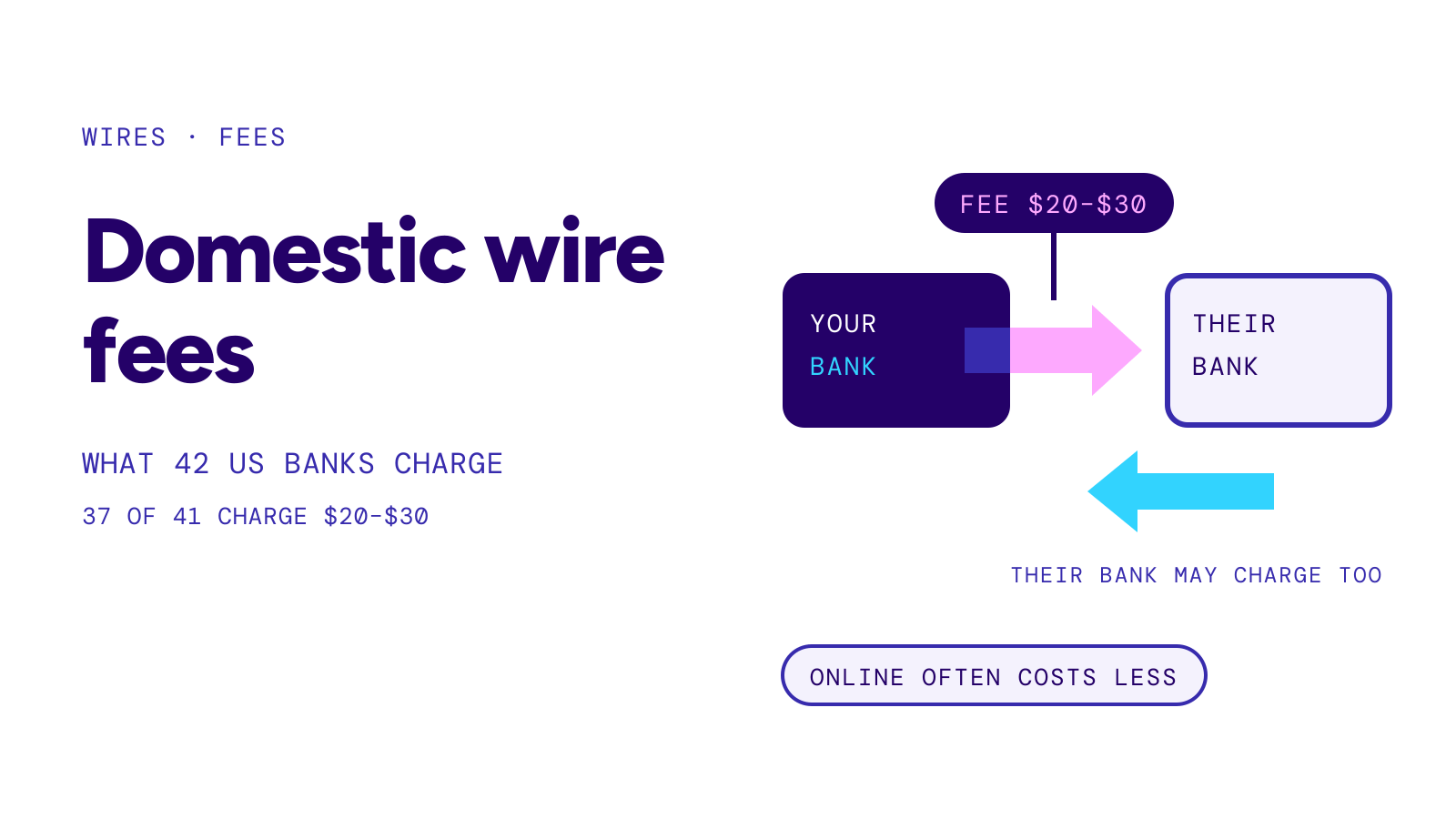
Two costs sit on top of the fee in the table: the exchange-rate markup, which banks build into the rate instead of listing it, and fees that intermediary or receiving banks may deduct along the way.
At a glance
- Outgoing international wire in USD$30 to $65 at the large banks below (online or digital price where one exists); $25 to $90 in the wider table of banks and credit unions
- Outgoing in foreign currency, online$0 to $25 at banks that list it separately
- Incoming international wire$0 to $25
- Exchange-rate markupBuilt into the rate; no bank below states it as a percentage
- Banks that do not send international wiresAlly, SoFi, Discover, American Express, Schwab Bank
- Your right to cancel a remittance transfer30 minutes after paying
Source: each bank’s fee schedule as linked in the tables below · Checked on September 27, 2026 (Wells Fargo and Citi: September 30, 2026)
International wire transfer fees by bank
| Bank | Outgoing, sent in USD | Outgoing, sent in foreign currency | Incoming international | Source |
|---|---|---|---|---|
| Bank of America | $45 | $0; exchange-rate markup applies | $15 | Personal Schedule of Fees |
| Capital One | $40 (branch only) | $0; $15 on Essential Checking, Essential Savings, High-Yield Checking | Wire support, receive a wire | |
| Chase | $40 online; $50 with a banker | $5 online, $0 if $5,000 or more; $50 with a banker | $15; $0 if originally sent via a Chase banker, chase.com or the Chase app | Additional Banking Services and Fees (PDF) |
| Citi (standard, online) | $35 | $0 (waived) | $15 | Citi wire transfers |
| PNC | $40 self-service; $50 agent-assisted | $5 self-service; $50 agent-assisted | $15 | Standard Checking fee schedule |
| TD Bank | $50 | $25 | $15 | Personal Fee Schedule (PDF) |
| Truist (Truist One) | $65 | $20 | Truist One disclosures and fees | |
| U.S. Bank | $50 (branch or phone) | $25 | Consumer Pricing Information (PDF) | |
| Wells Fargo | $30 digital; $40 branch | $0 digital; $40 branch | $0 | Consumer Account Fees, effective July 28, 2026 (PDF); Digital Wires |
| Ally Bank | Not offered | Not offered | $0 from Ally; intermediary fees may apply | Ally transfers help |
| SoFi | Not offered | Not offered | Not accepted | SoFi wire help |
Source: each bank’s own fee schedule or help page as linked · Checked on September 27, 2026 (Wells Fargo and Citi: September 30, 2026)
These are standard consumer prices. Many banks waive wire fees on premium accounts: Citi waives them for Citigold, for example, and Truist for Truist Marquee Checking. Check your own account’s fee schedule.
Wells Fargo’s consumer fee schedule effective July 28, 2026, which it calls part of your account contract, sets the digital wire fee in US dollars at $30, and its Digital Wires page states the same. Its earlier consumer disclosures (PDF) listed $25, the figure some older Wells Fargo help pages still show. Capital One and U.S. Bank send international wires only through a branch (U.S. Bank also by phone), not online. For Wells Fargo’s wire routing number, cutoffs and steps, see wells fargo wire transfer routing number.
International wire fees at more banks and credit unions
The table below covers the banks and credit unions in our Banks catalog, in order of search demand, with the fee as each one’s own fee schedule states it. The cheapest outgoing wire here is Navy Federal’s $25. The most expensive are Associated Bank’s $90 for a branch-created wire where the sender pays every other bank’s fee, and Fifth Third’s $85 for a wire sent in US dollars.
| Bank | Outgoing international wire | Incoming international wire | Source |
|---|---|---|---|
| Navy Federal Credit Union | $25 | No charge (US dollars only) | Fee schedule |
| Bank of America | $45 in US dollars; no wire fee in foreign currency (exchange-rate markup) | $15; waived for BofA Rewards Preferred Plus, Preferred Honors, Premier | Fee schedule |
| Wells Fargo | $30 digital in US dollars; $0 digital in foreign currency; $40 in a branch | No fee | Fee schedule |
| Chase | $40 online in US dollars; $5 online in foreign currency; $50 with a banker | $15; $0 if originally sent with a Chase banker or online at Chase | Fee schedule |
| KeyBank | $45 | $20 | Fee schedule |
| USAA | $45 total ($20 wire fee plus $25 international wire service fee) | No charge | Fee schedule |
| Capital One | $40, in a branch only | No fee for 360 Checking; $15 for Essential and High-Yield accounts | Wire page |
| Citibank | $35 online in US dollars; no fee online in foreign currency (Standard) | $15; waived for Citi Priority, Citigold, Citigold Private Client | Wire page |
| PNC Bank | $40 online in US dollars; $5 online in foreign currency; $50 with an agent | $15 | Fee schedule |
| U.S. Bank | $50, at a branch or by phone | $25 | Fee schedule |
| TD Bank | $50 in US dollars; $25 in foreign currency; plus correspondent fees | $15 | Fee schedule |
| Truist | $65 with a teammate | $20 | Fee schedule |
| Fifth Third | $85 in US dollars; $50 in foreign currency | $15 | Fee schedule |
| Huntington | $75 | $15 | Fee schedule |
| Citizens | $40 in US dollars; $15 in foreign currency | $12 in US dollars; $10 in foreign currency | Fee schedule |
| M&T Bank | $75 | $16; waived on MyChoice Premium | Fee schedule |
| Ally | Not offered | $0 at Ally; intermediary banks may charge | Fee schedule |
| SoFi | Not offered | Not offered | Fee schedule |
| Discover | Not offered | Fee schedule | |
| PenFed | $30 | $0 | Fee schedule |
| American Express | Not offered | Fee schedule | |
| Schwab Bank | Not offered | Not offered | Fee schedule |
| Santander | $40 in US dollars | Fee schedule | |
| BMO | $50 | Fee schedule | |
| BECU | $35 | $0 | Fee schedule |
| Frost Bank | $15 | Fee schedule | |
| Synovus | $45 | $25 | Fee schedule |
| Alliant Credit Union | $50 | Free | Fee schedule |
| Zions Bank | $50, in a branch or through Central Wires | $18 | Fee schedule |
| Associated Bank | $45 if the recipient pays other banks’ fees; $60 or $85 if you pay them; $50, $65 or $90 when a branch creates the wire | $15 | Fee schedule |
| Golden 1 Credit Union | $40 | Free | Consumer schedule, January 1, 2026 |
| SchoolsFirst FCU | $45 | Free | Fee statement, April 2026; wire instructions |
| Global Credit Union | $50 | Consumer schedule, effective November 1, 2025 |
Source: each institution’s own fee schedule or wire page, as linked · Checked on September 27–28, 2026 (Wells Fargo and Citi: September 30, 2026; Zions Bank and Associated Bank: October 2, 2026; Golden 1 and SchoolsFirst: October 7, 2026; Global Credit Union: October 9, 2026)
Why “no fee” does not mean free: the exchange rate
When a bank converts your dollars, the rate it uses includes its own margin. The banks say so in their own words:
- Bank of America: “there are markups associated with the currency conversion included in our exchange rate and we make money from the foreign currency exchange.”
- Chase: the rate “includes a spread”, and “you should expect that these foreign exchange rates will be less favorable than rates quoted online or in publications.”
- Wells Fargo: the rate “is set at our sole discretion, and it includes a markup”, and different customers may receive different rates for the same transaction.
- U.S. Bank (for money received in a foreign currency): the rate “will include our profit, fees, costs and charges.”
None of these banks states the markup as a percentage. So a “$0” foreign currency wire can cost more than a “$45” dollar wire, or less. The only way to compare is the amount the recipient will get, which the bank has to show you before you pay.
Fees you do not see in the table
Intermediary and receiving banks. An international wire can pass through other banks, and they may take a cut. Chase and U.S. Bank say other financial institutions may deduct fees from the amount, and Truist says intermediary banks may deduct fees from incoming international wires. Ally says an intermediary bank may charge a fee even though Ally does not.
The recipient’s own bank. The CFPB gives an example: a sender asks for US$120 to go to an account abroad, and only US$100 is deposited because the recipient’s bank took a US$20 incoming wire fee. That is not an error under the rules, as long as the sender was told that such fees may apply.
What the federal remittance rule gives you
Most international wires sent by consumers count as “remittance transfers” under Regulation E, subpart B: electronic transfers of more than $15 from the U.S. to someone abroad. The rule applies to banks that sent more than 500 such transfers in the prior or current year. Under it:
- Before you pay, the bank must show its fees and taxes, the exchange rate, certain fees charged by others, and the amount expected to be delivered.
- After you pay, you get a receipt with the date the money will be available.
- You can cancel within 30 minutes of paying, at no charge, unless the money has already been picked up or deposited.
- You can report an error within 180 days of the disclosed availability date. The bank must investigate within 90 days.
Bank of America describes the effect in its fee schedule: it must tell you the exact fees for international wires, including other banks’ fees, and if it does not have them, it cannot process the request.
Warning
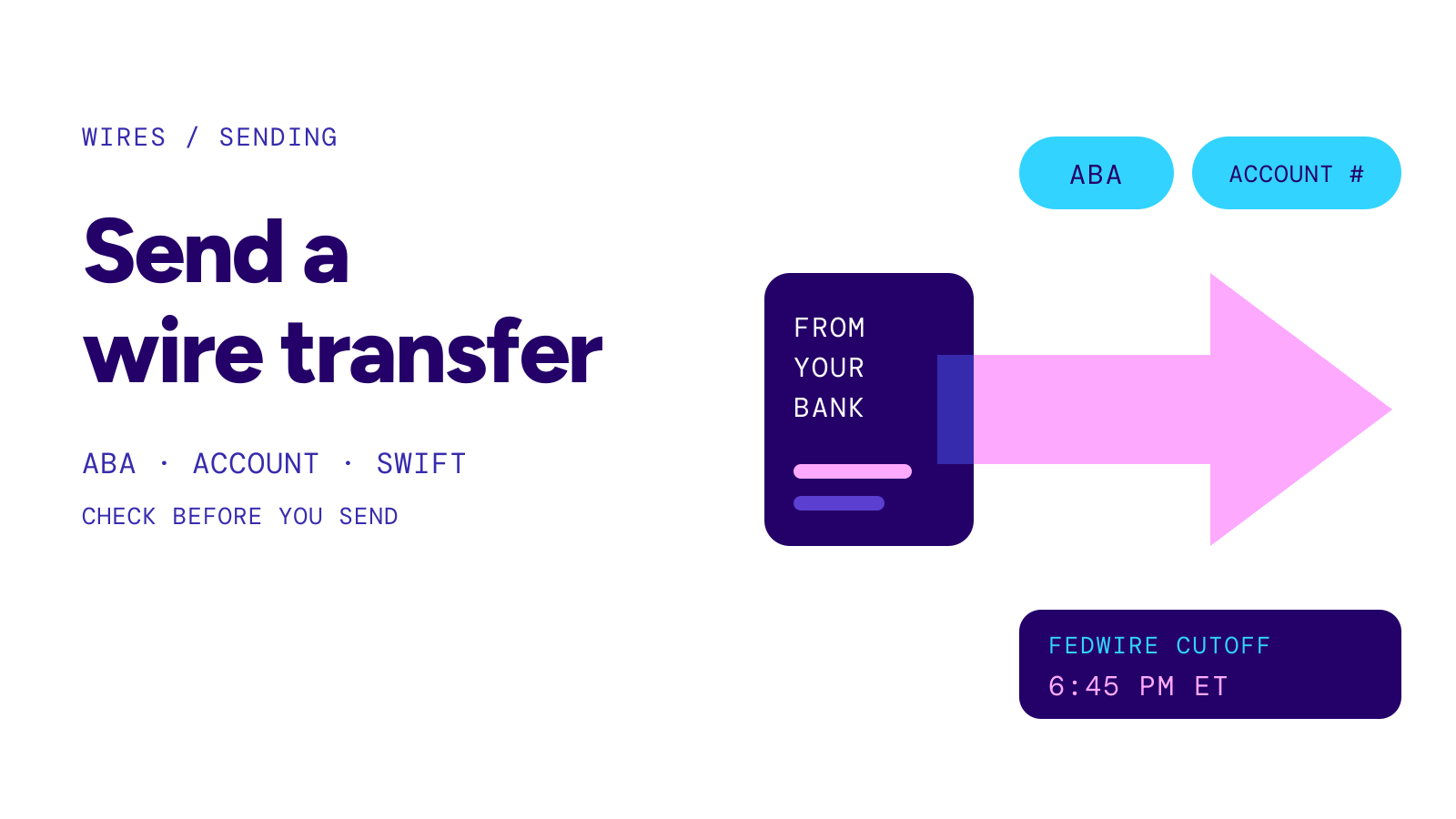
An international wire is very hard to reverse once the cancellation window has passed. Check the recipient’s name, account number or IBAN, and SWIFT/BIC code before you pay. Confirm wiring instructions by phone, never only by email.
How the channel changes the price
Several banks charge more when a person helps you. Chase charges $50 for an international wire sent with a banker, against $40 online in dollars. PNC charges $50 agent-assisted, against $40 self-service. Wells Fargo charges $40 at a branch, against $30 digital. At Capital One the branch is the only way to send one.
If a wire is late or missing, see Wire transfer not received. For timing, see How long do wire transfers take.