Short answer
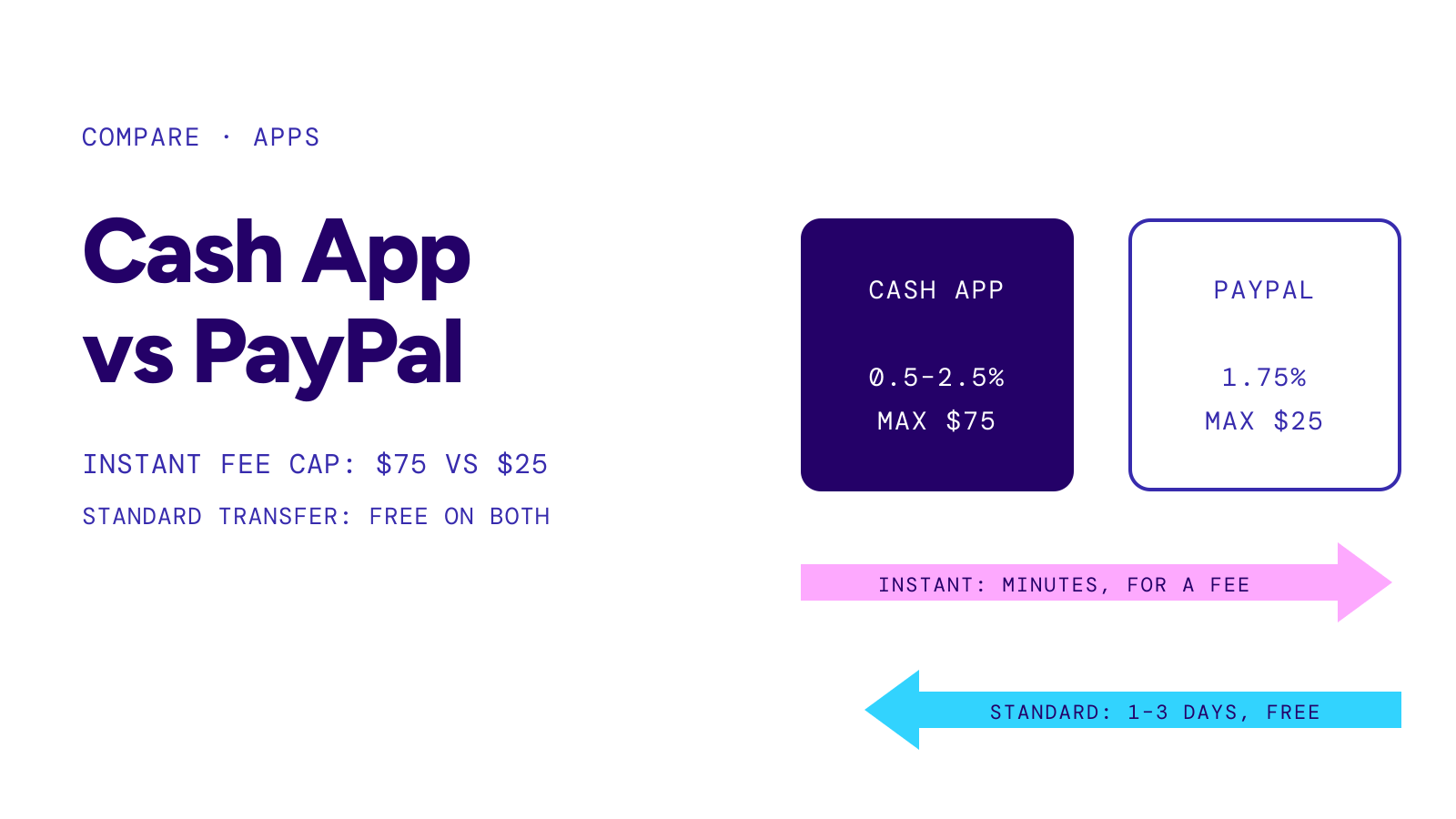
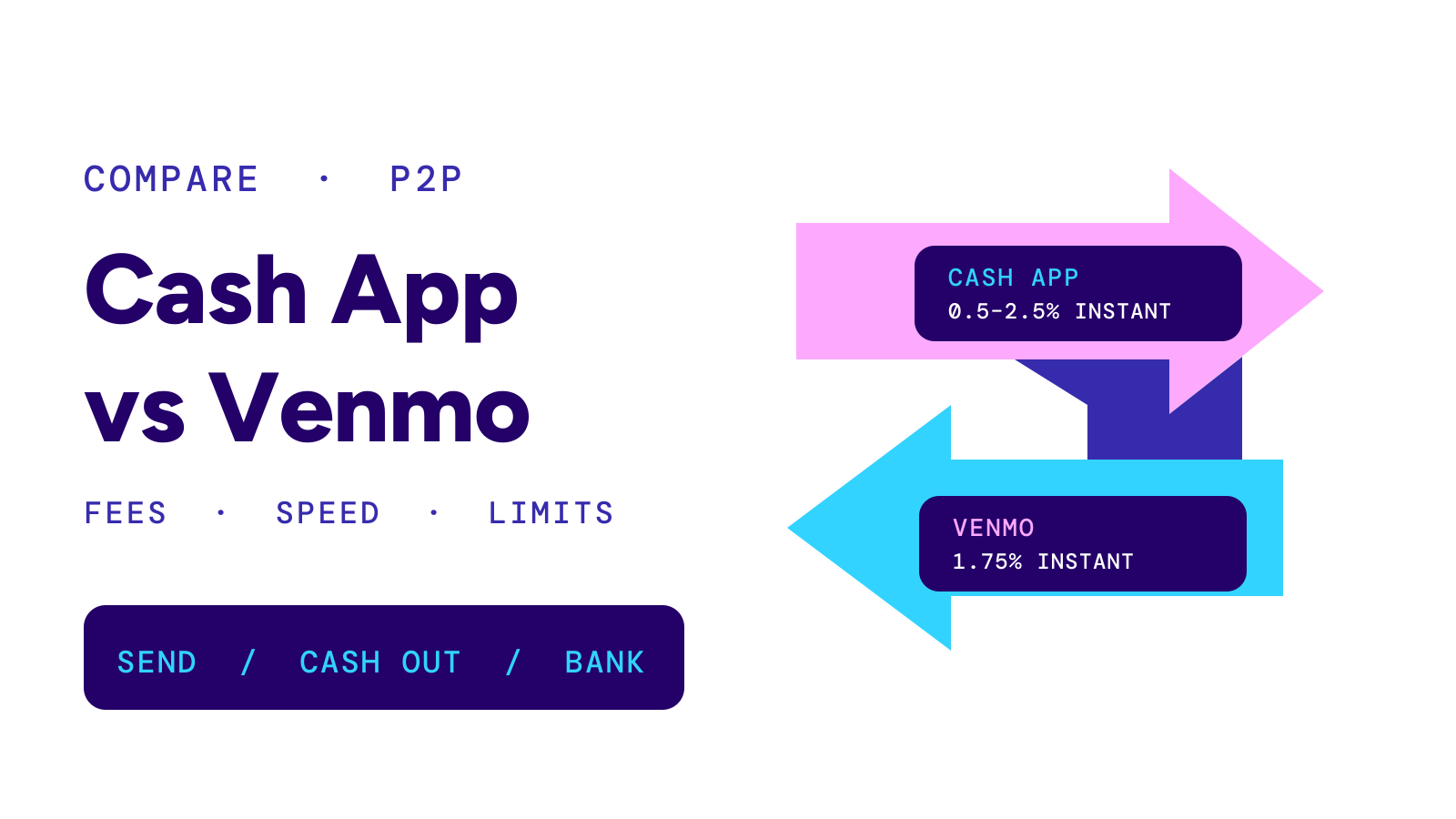
Cash App is the stronger fit if verified person-to-person send capacity is your priority. Venmo publishes a simpler instant-transfer price: 1.75% with a $0.25 minimum and $25 maximum. Cash App says its instant cash-out fee is shown before confirmation and generally falls between 0.5% and 2.5%, with a $0.25–$1 minimum and $75 maximum. Both apps offer a slower free bank-transfer route.
On this page
At a glance
| Question | Cash App | Venmo |
|---|---|---|
| How can I fund a person-to-person payment? | Cash App balance, linked debit card, Apple Pay or Google Pay | Venmo balance when available, linked bank account, debit card or credit card |
| Published unverified P2P limit | Up to $1,000 sent and received in a rolling 30-day period | $299.99 in weekly spending |
| Published verified P2P limit | Up to $40,000 sent in a rolling 30-day period | Up to $60,000 in weekly spending |
| Standard bank transfer | Free; usually 1–3 business days | Free; usually 1–3 business days |
| Instant bank transfer | Usually immediate; 0.5%–2.5%, with the exact fee shown before confirmation | Typically within 30 minutes; 1.75%, minimum $0.25 and maximum $25 |
| Credit-card-funded P2P fee | Cash App’s current sending page does not list a credit card as a funding option | 3% |
Sources: Cash App and Venmo official help pages, checked October 16, 2026. Limits can be account-specific, and both providers may review or delay a transfer.
The headline numbers need context. The two companies use different time windows, verification rules and bank-transfer language. A larger number in one row does not mean every account will receive that limit or that every payment will be approved.
Funding a payment
Cash App’s current sending instructions list four ways to pay: your Cash App balance, a linked debit card, Apple Pay or Google Pay. The minimum payment is $1. You can address a payment using a recipient’s name, $cashtag, phone number or email address.
Venmo lets users add a bank account or card. Its help center says a person-to-person payment funded by a credit card carries a 3% fee. That fee does not apply to an authorized merchant purchase simply because the funding source is a credit card, but a card issuer may still treat a transaction as a cash advance and add its own charge.
If you are choosing based on how you want to fund a payment, check the funding source displayed on the final review screen. An old default card or bank account is a more common practical problem than the headline limit.
Sending limits are not directly comparable
Cash App publishes a rolling 30-day framework. An unverified or sponsored account can send and receive up to $1,000 during that period, and Cash App lists a $1,500 total account limit for those accounts. After identity verification, the published send limit rises to $40,000 per rolling 30 days. Cash App says verified receiving limits are shown in the app and can differ by account.
Venmo uses rolling weekly limits. Before identity verification, the combined weekly spending limit is $299.99. After verification, Venmo says a personal profile may spend up to $60,000 per week. That total can include person-to-person payments, authorized merchant payments and Venmo Debit Card purchases, so it is not a promise that one $60,000 payment will go through.
Rolling windows matter. A limit does not reset at midnight on Monday or on the first day of the month. Each earlier transaction stops counting only when it moves outside the provider’s stated seven-day or 30-day window.
Cashing out to a bank or debit card
Both services offer two broad routes from an app balance to a bank account:
- A standard transfer is slower and free. Both providers say it usually takes one to three business days.
- An instant transfer is faster and charges a fee. It only works with an eligible linked bank account or debit card.
Cash App says an instant cash-out is usually immediate. The service displays the exact fee before you confirm; the published range is 0.5% to 2.5%, with a minimum fee of $0.25 to $1 and a maximum of $75. Those ranges mean two users should not assume they will see the same quote.
Venmo says an instant transfer typically arrives within 30 minutes and is available 24 hours a day, 365 days a year. Its published fee is 1.75%, with a $0.25 minimum and $25 maximum. Venmo also warns that transfers can be reviewed, delayed, blocked or removed for eligible-account reasons.
For a detailed fee comparison across more services, see our guide to instant transfer fees. If you need to move money from one wallet to another, the usual route is not a direct app-to-app rail; start with how transfers between payment apps work.
Bank-transfer limits after verification
Venmo separately publishes limits for moving money from Venmo to a bank. Once verified, a user can transfer up to $5,000 in one bank transfer and up to $19,999.99 per week. Without verification, the weekly bank-transfer limit is $999.99. The minimum instant transfer is $0.26.
Cash App’s current account-limits page does not publish one universal bank-withdrawal ceiling. It directs users to the Limits section in the app for the amount available to their account. That is the number to trust before planning a large withdrawal.
Which app is the better fit?
Choose Cash App when:
- you are verified and need the higher published P2P send allowance over a rolling 30-day window;
- your preferred funding source appears in Cash App’s current sending flow;
- you are comfortable checking a variable instant-transfer quote before confirming.
Choose Venmo when:
- you want a clearly published 1.75% instant-transfer price with a $25 cap;
- you need a published verified weekly spending ceiling;
- you sometimes fund P2P payments by credit card and accept the 3% Venmo fee plus any separate issuer treatment.
Neither app is a substitute for a bank transfer when the recipient must receive money on a fixed deadline. Instant-transfer estimates are not delivery guarantees, and account reviews can intervene. For a comparison with a bank-linked P2P network, read Zelle vs Cash App or Zelle vs Venmo.
Warning patterns
Comparing a 30-day limit with a weekly limit as if they were identical
They cover different windows and, in Venmo’s case, different kinds of spending. Use the in-app limit page before sending a large amount.
Treating “instant” as guaranteed
Cash App says instant transfers are typically immediate; Venmo says they typically arrive within 30 minutes. Eligibility checks and reviews can still delay them.
Ignoring the funding source
On Venmo, a credit-card-funded P2P payment carries a 3% fee. On either app, confirm the selected balance, bank or card before you tap the final send button.
Paying an instant fee when timing is flexible
If one to three business days works, the standard bank-transfer option is free on both services.