Short answer
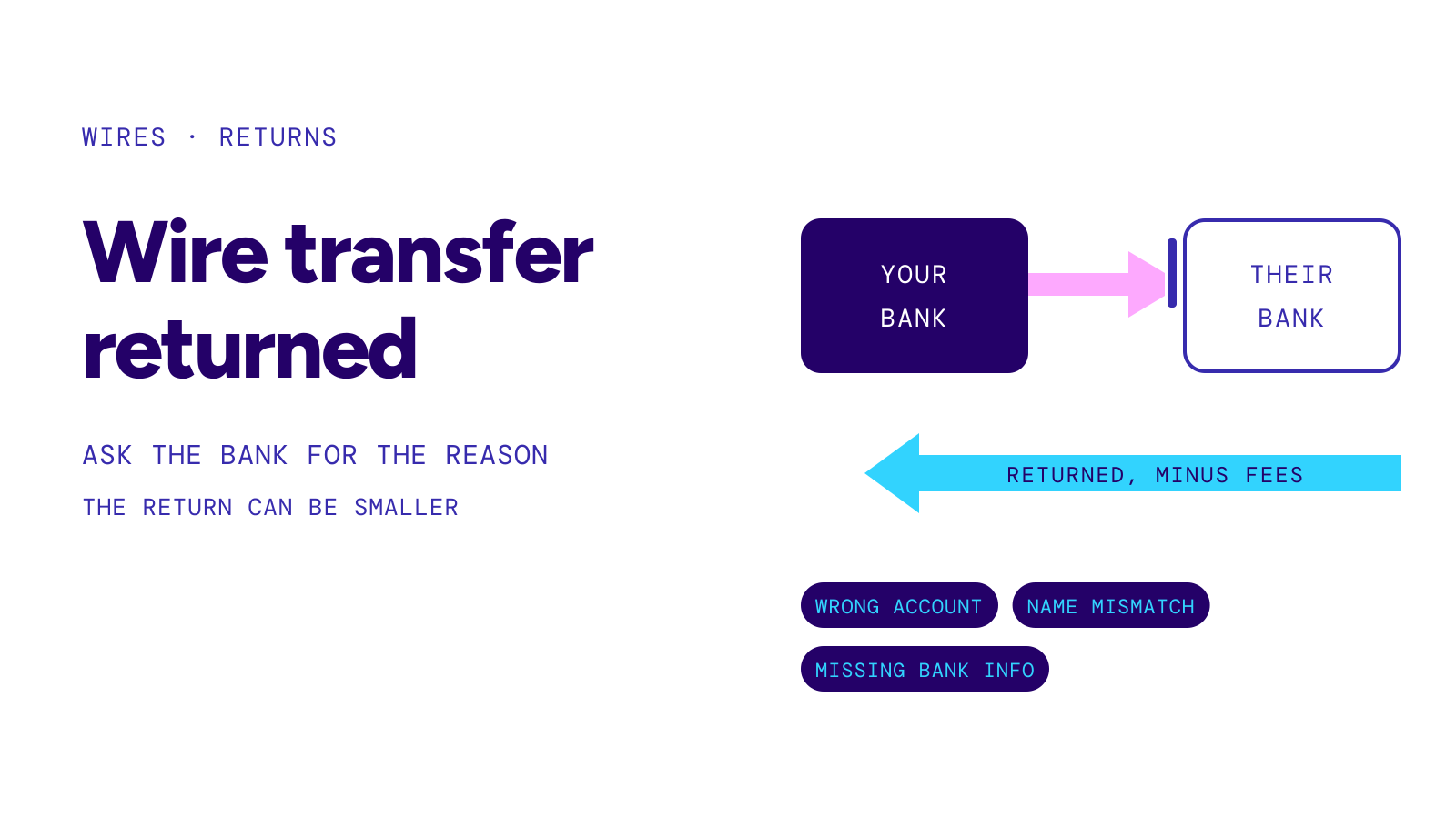
A wire transfer returned to the sender may have failed because account details, the recipient’s name or required information did not match the receiving bank’s requirements. Ask the sending bank for the return reason before sending again. The amount returned can be lower because of processing fees or a changed exchange rate.
On this page
Find the return reason before correcting anything
A returned wire is different from a payment that is still being processed. Start with the status in your bank’s wire activity, then contact the bank through its official app, website or statement contact details. Ask whether the payment has been returned, whether the credit has posted and what reason came back with the return. Chase’s wire FAQ lists several possible return reasons. They include a wrong account number, missing bank- or country-specific information, details in a message to the receiving bank that conflict with its records, and a recipient name that does not match. These are Chase’s published examples, not a complete rulebook for every bank.
A return reason gives you a specific problem to resolve. If the account number was wrong, compare the original instructions with the recipient’s bank-issued instructions. If information was missing, ask which information the destination required. Repeating the same instruction unchanged can produce the same outcome.
Why the returned amount can be smaller
Chase identifies deductions by receiving or intermediary banks as one reason a wire returns with less money. It also explains that a different exchange rate can affect an international wire when it is returned.
Keep the original sent amount, any separately charged sending fee and the returned credit in your comparison. Those amounts describe different parts of the transaction. Ask your bank to explain the difference and identify the charges it can account for, rather than assuming that a smaller credit is a second unauthorized transfer.
No single return-fee figure applies across institutions and routes. The relevant account agreement and the bank’s explanation of this wire determine which charges to review. For the original sending cost, see domestic wire transfer fees.
Sending a corrected wire
Get the receiving instructions again from the recipient, then independently confirm an unexpected change using a contact method you already know. Avoid treating an emailed replacement account number as sufficient proof that the recipient changed banks.
Compare the recipient name and account number with the bank’s requirements, including any purpose or country-specific information. Ask the sending bank whether the issue is fully resolved and whether a new instruction is needed. Keep the original reference so the bank can distinguish the returned payment from its replacement.
A bank’s return does not mean that every mistaken wire can be recalled. If the payment went to the wrong account or you suspect a scam, contact the bank immediately. The wire reversal guide separates cancellation, recall and recovery.