Short answer
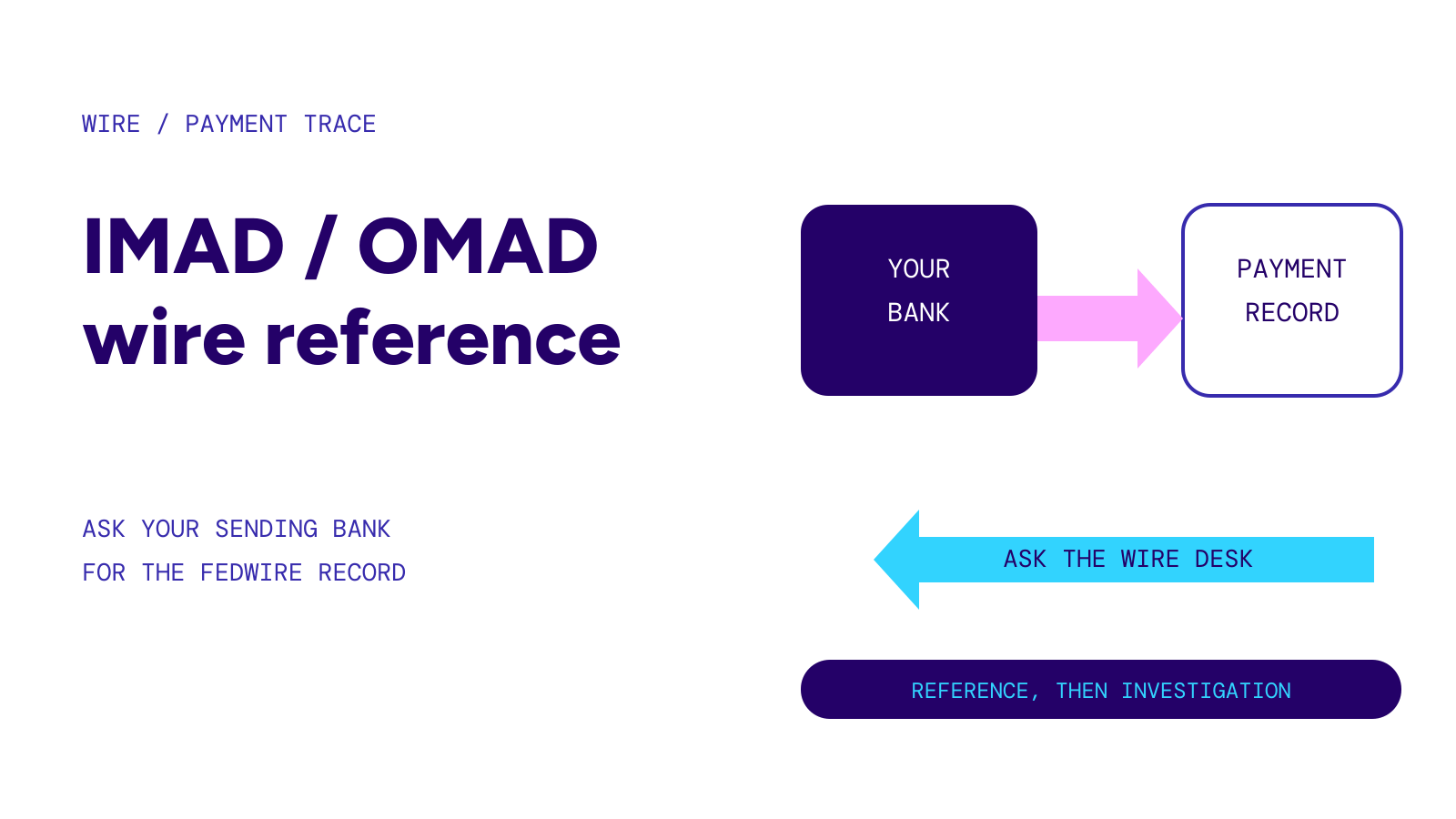
An IMAD OMAD number identifies a Fedwire payment message and helps a bank investigate a transfer. Ask the sending bank’s wire department for it after the wire has been sent. Use it with the payment details; a reference number is not a substitute for confirming that the recipient’s account was credited.
On this page
What the letters refer to
IMAD is Input Message Accountability Data; OMAD is Output Message Accountability Data. The Federal Reserve’s Fedwire FAQ says successfully processed messages contain both identifiers.
For a consumer, the practical use is giving the bank a specific payment record to investigate. It is more precise than saying “the wire I sent yesterday,” particularly when several payments share an amount or recipient.
Fedwire is one payment system. Before asking for this reference, establish which rail the bank used. An ACH transfer or another payment method should not be judged missing merely because it has no Fedwire identifier. Start with ACH versus wire if the bank’s description is unclear.
Ask the sending bank for the actual reference
Kraken’s funding-support instructions say the bank can supply IMAD/OMAD information after funds have been wired. If the first representative cannot find it, ask for the bank manager or wire department.
Keep this request separate from asking whether an instruction was submitted. The useful question is: “Was this payment sent through Fedwire, and can your wire department provide its IMAD and OMAD references?”
Have the date, amount, currency and intended recipient details ready. Compare the bank’s answer with the original confirmation. Do not replace the original record with a reference copied from an unrelated transfer.
| Record or response | What it helps establish |
|---|---|
| Your payment instruction | What you asked the bank to do |
| Bank’s wire confirmation | What the bank says it sent |
| IMAD and OMAD references | Which Fedwire message the bank can investigate |
| Receiving-bank confirmation | Whether the intended account was credited |
| Return information | Whether the payment came back and where it is now |
These records support different parts of the investigation. Getting one does not remove the need for the others.
A reference is not the final answer to a missing credit
The Federal Reserve FAQ distinguishes successful processing from an investigation to confirm receipt and credit to the creditor. Its participant-facing instructions describe an investigation request for that second question.
You do not need to send a banking-system message yourself. Ask your bank to investigate the payment and explain the result in terms you can use: sent, received, credited, returned or still being traced. If the bank gives only an internal case number, ask whether that is the case reference or the underlying Fedwire payment reference.
Our wire transfer not received guide covers the broader checks. Keep the investigation attached to the original payment rather than making a replacement transfer before its status is understood.
If the money was returned
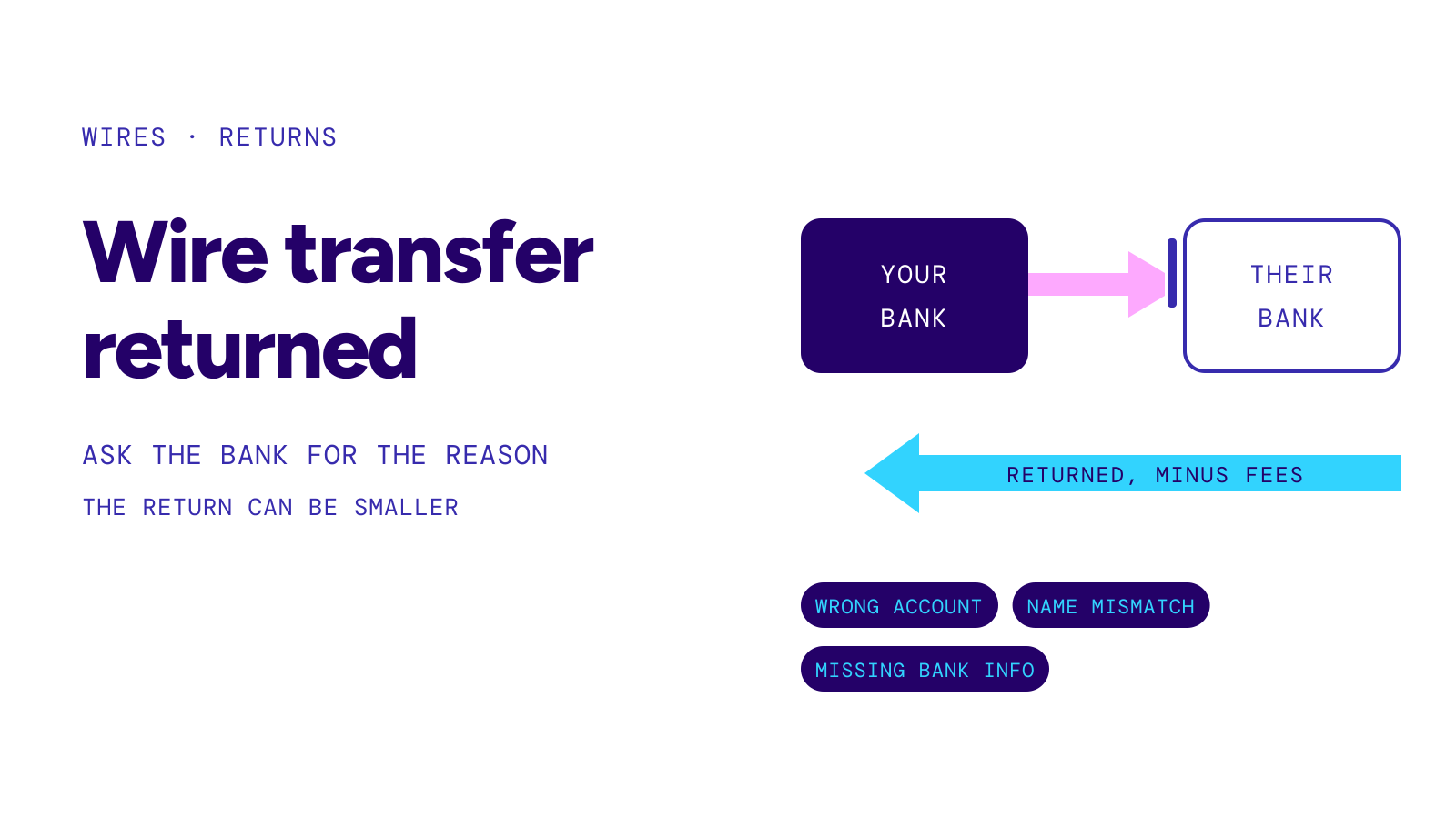
A returned payment needs its own explanation. Kraken specifically tells customers who receive an IMAD/OMAD reference from its support team for a returned deposit or withdrawal to give that information to their bank to locate the credit.
That is a documented support example, not a rule that every institution uses the same return workflow. Ask your bank which reference and dates apply to your case. For common causes and next steps, see wire transfer returned.
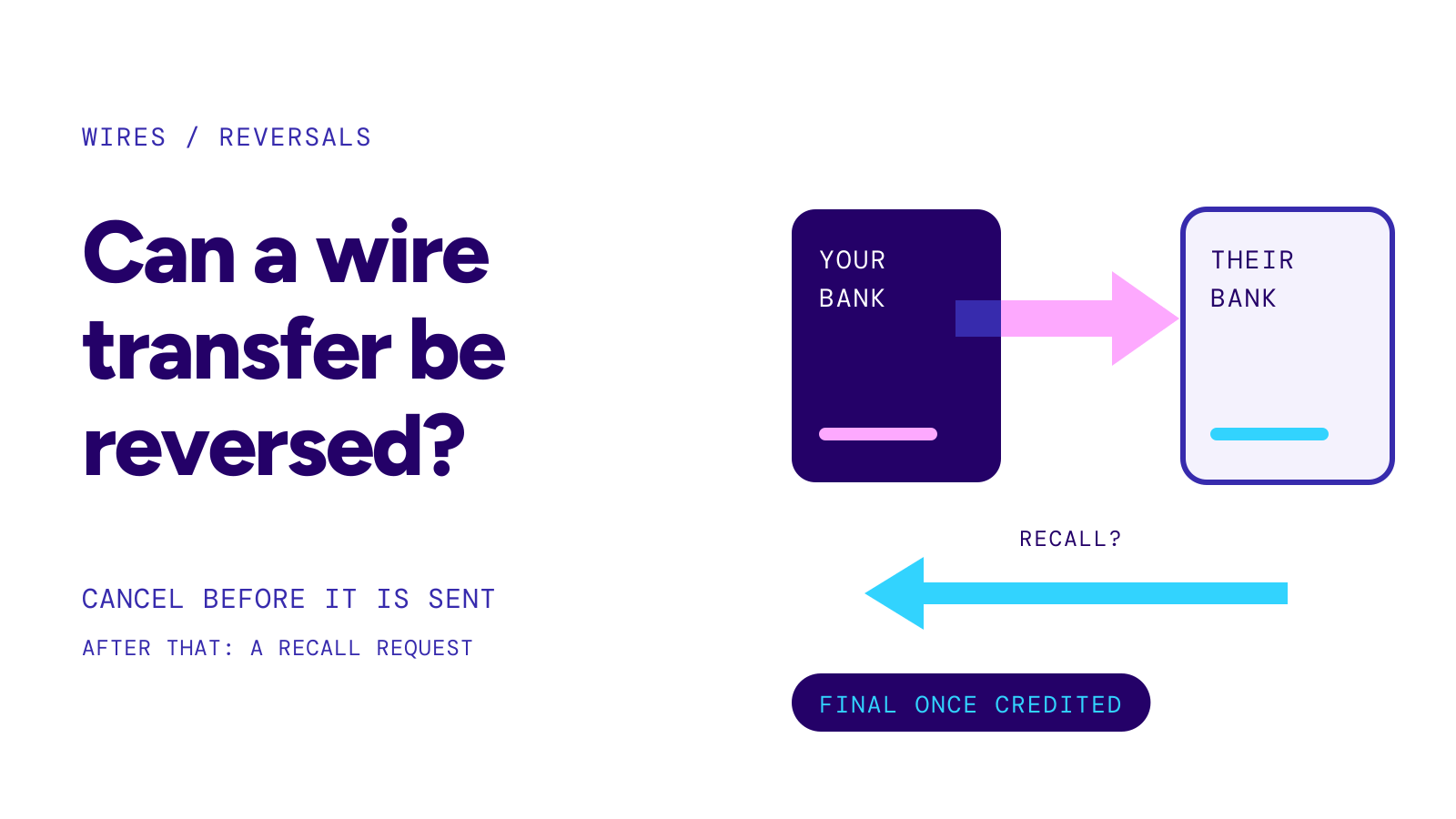
A return request also should not be confused with a completed refund. The Fed’s FAQ describes how participants request a return; it does not promise that a consumer can reverse any wire on demand.