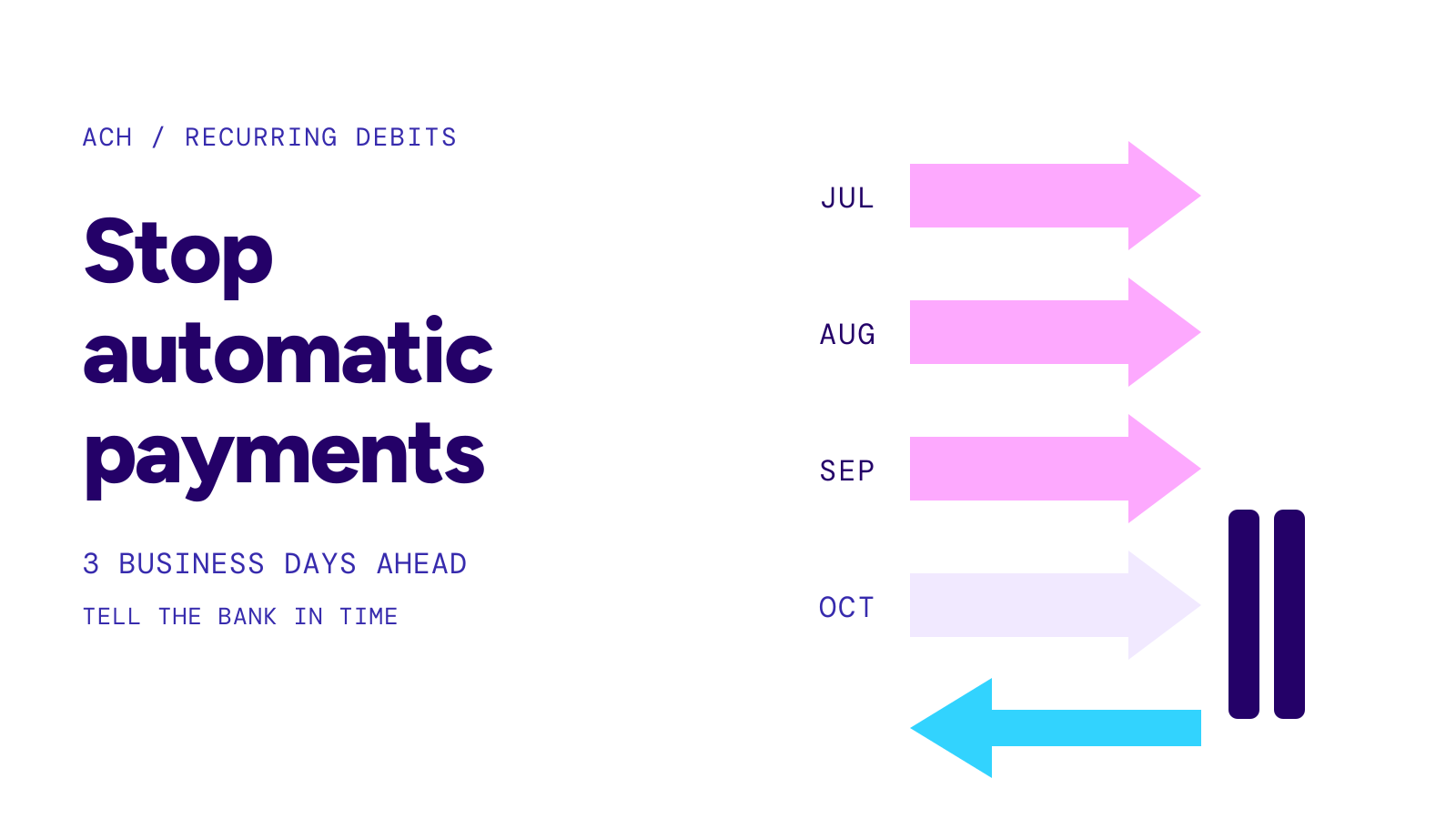
To stop automatic payments, tell the company that its permission to debit your bank account is withdrawn, then notify your bank. Keep a written record of both requests. A subscription cancellation, an authorization revocation and a bank stop-payment order do different jobs.
Short answer
For a preauthorized electronic transfer from a US consumer account, you can give your bank a stop-payment order at least three business days before the scheduled debit. Canceling the payment method does not cancel a contract or an unpaid bill.
On this page
Source: CFPB, Regulation E § 1005.10 · Checked on October 20, 2026.
Identify who starts the payment
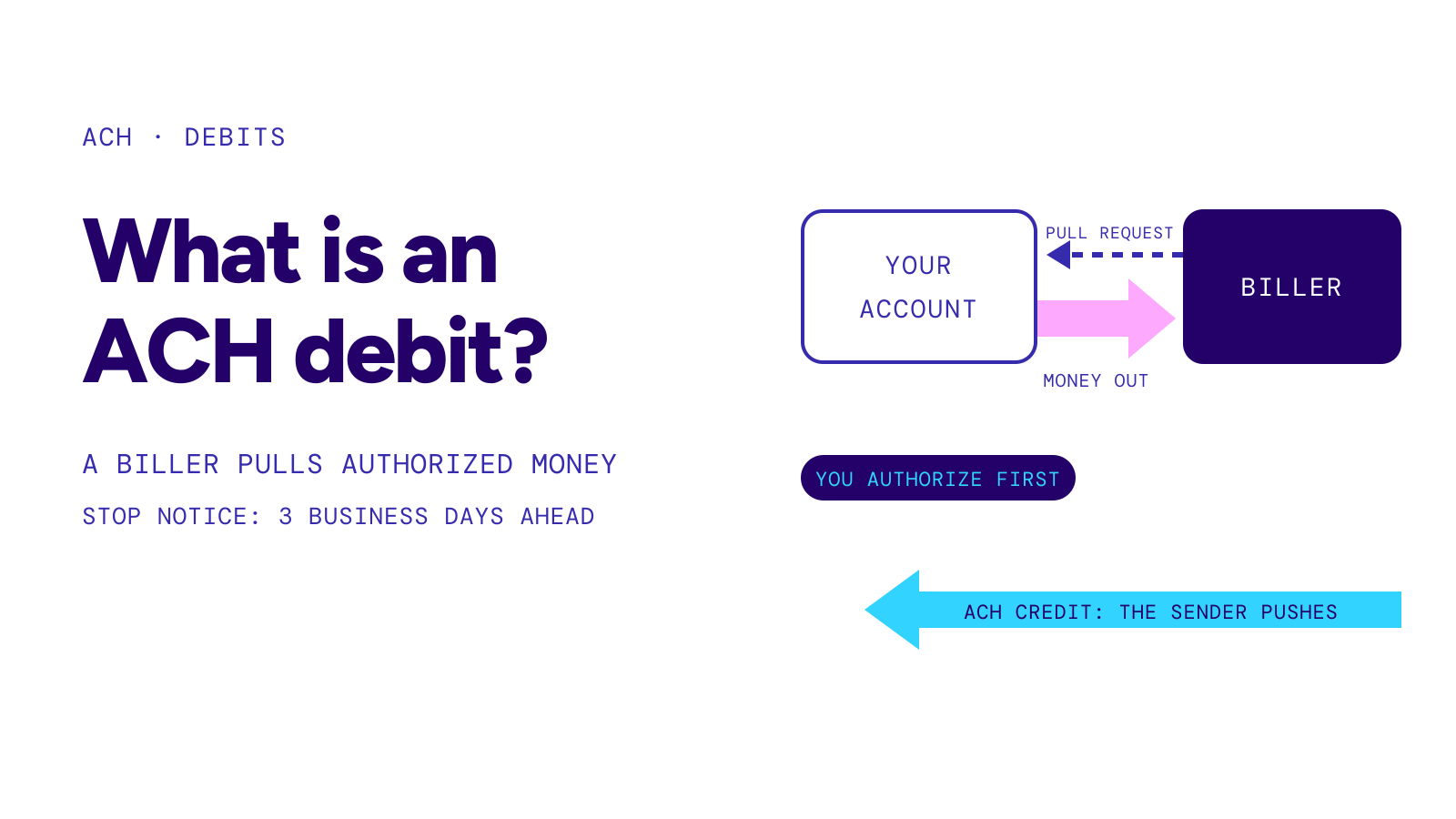
An automatic debit lets a company pull money from your account under an authorization. With bank bill pay, you instruct your bank to send the money. The CFPB distinguishes these arrangements because canceling a bank instruction and withdrawing a company’s debit permission involve different parties.
Look at the most recent payment and the setup screen before you call. Record the company name, the statement description, the amount and the next expected date. Ask the bank which kind of payment it sees if the label is unclear. For the underlying distinction, read ACH credit vs ACH debit.
Source: CFPB, how automatic payments work · Checked on October 20, 2026.
Withdraw the company’s authorization
Contact the company through its official customer-service channel and state that you revoke permission for future automatic debits. Follow the call with a letter, email or the company’s written form. Make the scope explicit: are you ending the service, or keeping it and paying another way?
The CFPB provides sample letters on its stop-automatic-payments page. Use the version that matches your situation and retain your own copy.
A practical request record can have four columns:
| Record | What to save | Why it helps later |
|---|---|---|
| Company request | Date, channel and a copy of your wording | Shows what permission you withdrew |
| Company response | Reference number and confirmation | Connects the response to your request |
| Bank notification | Date, channel and instructions received | Keeps the bank’s follow-up steps visible |
| Later debit | Posting date, amount and statement description | Identifies the payment you are questioning |
This is a suggested personal record, not a bank form or a legal filing.
Notify the bank and ask about a stop order
Tell the bank or credit union that you revoked the company’s authorization. Ask how to deliver the written notice, whether it also recommends a stop-payment order and what fee applies. The CFPB says banks generally charge for stop orders; there is no single fee that applies to every account.
Source: CFPB, stopping automatic payments · Checked on October 20, 2026.
Regulation E allows an oral or written stop order made at least three business days before the transfer. If the bank requires written confirmation after an oral order, the rule gives 14 days and requires the bank to explain that requirement and where to send it. Missing that confirmation can end the oral order’s binding effect.
The official interpretation also addresses resubmitted debits and revocation: the institution must continue honoring the stop order when the debit is resubmitted, and must block future covered payments after notification that authorization is no longer valid, subject to the written-confirmation provisions.
Source: Regulation E § 1005.10 and its official interpretation · Checked on October 20, 2026.
Keep the bill and the payment method separate
If the service continues, arrange another way to pay. If you want the contract to end, complete the company’s cancellation procedure as well. A bank block cannot determine whether a service contract has ended or whether a final invoice is correct.
For example, suppose you are keeping a membership but want to pay each invoice yourself. Your record should say that the debit authorization ended and identify the replacement payment arrangement. A confirmation saying only “autopay off” does not answer whether the account still has an amount due.
When moving banks, coordinate the change with incoming money. The CFPB’s checking-account moving checklist recommends listing deposits and withdrawals, confirming when deposits switch and leaving enough in the old account for uncleared payments.
If a debit still appears
Contact the bank promptly and identify the specific payment. Give it the revocation and stop-order records, including the date and channel used. Ask for the bank’s error-resolution process and retain the case number.
Regulation E’s error-notice rule generally uses 60 days after the institution sends the statement first showing the error. The details of an error investigation are separate from an advance stop order, so do not wait for another billing cycle to raise a payment you dispute.
Source: CFPB, Regulation E § 1005.11 · Checked on October 20, 2026.